What Type of Wood Is Best for a Tabletop?
Choosing the right wood for a tabletop is about more than picking a beautiful color. The species affects durability, grain, maintenance, stability, and the overall character of a room. For interior designers, remodeling companies, and home design professionals, the best choice should balance aesthetics with how the table will actually be used.
Hardness is one useful consideration. The Janka hardness scale measures how resistant wood is to denting and wear. Hard maple, for example, ranks around 1,450 lbf, while white oak is around 1,360 lbf, walnut around 1,010 lbf, and cherry around 950 lbf. However, hardness is only one part of the decision.
1. White Oak: The Versatile Workhorse
White oak is an excellent choice for busy dining tables and contemporary interiors. Its prominent grain provides visual interest, while its durability makes it suitable for everyday use. It also accepts stains and clear finishes well, making it easy to coordinate with different design palettes.
For a refined appearance, consider quarter-sawn or rift-sawn white oak, which can produce a more distinctive grain pattern and help manage movement in wider tops.
2. Hard Maple: Clean and Durable
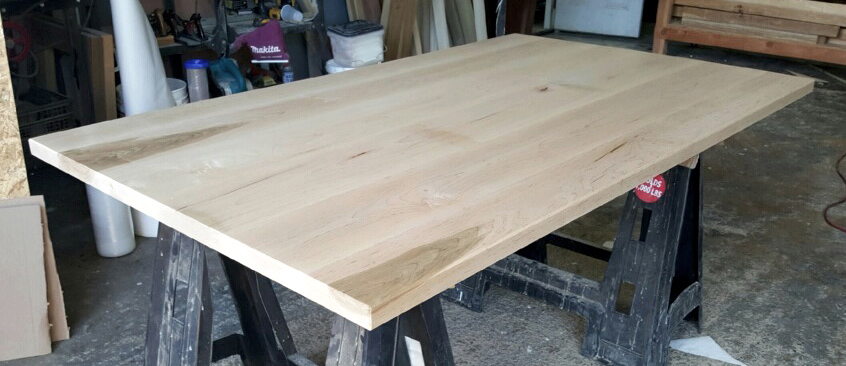
Hard maple is ideal when you want a light-colored tabletop with a relatively subtle grain. Its high hardness makes it resistant to dents and everyday wear. This makes it particularly useful for hardworking kitchen and dining tables.
Its pale appearance also works beautifully in contemporary, minimalist, and Scandinavian-inspired spaces.
3. Walnut: Warm and Sophisticated
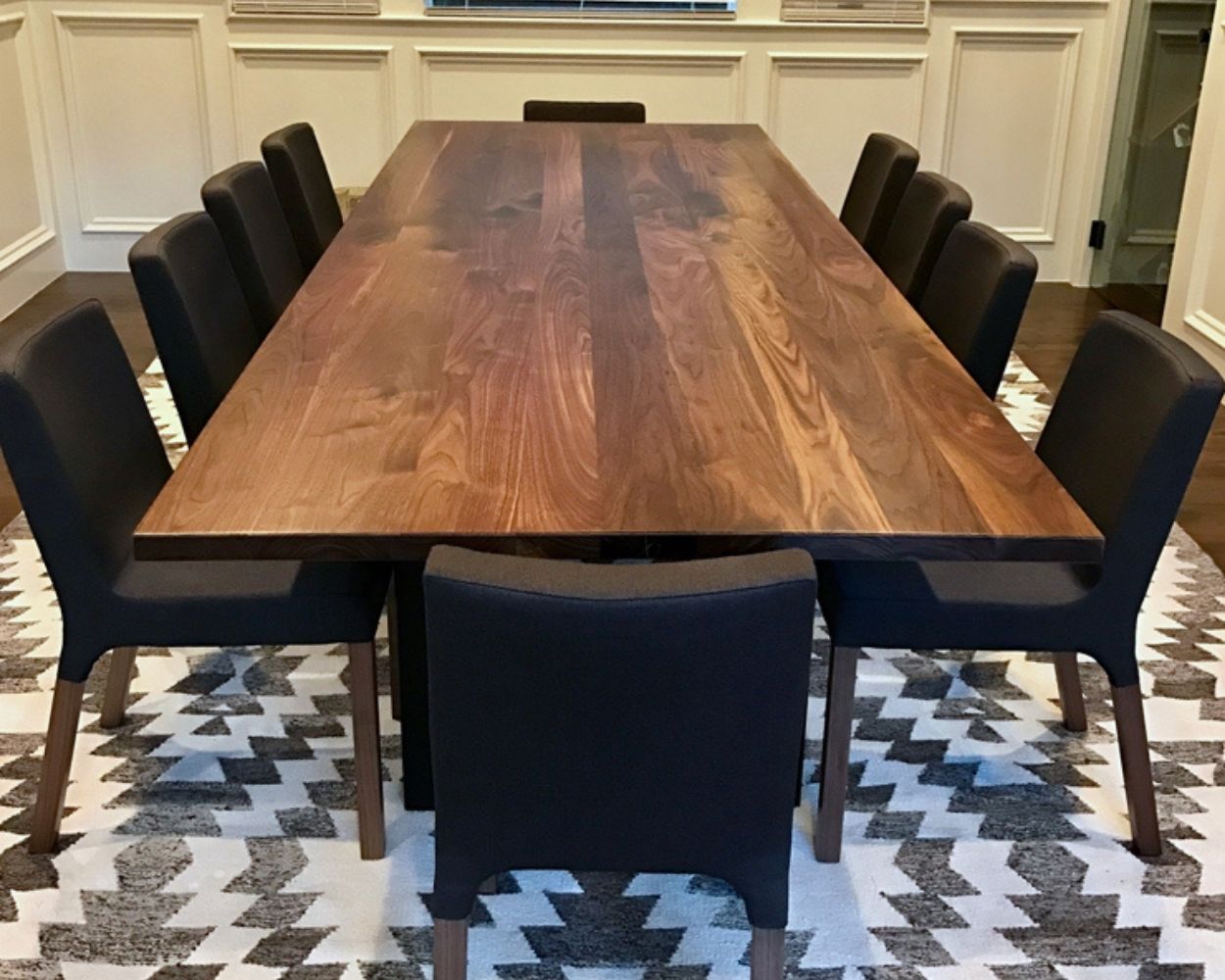
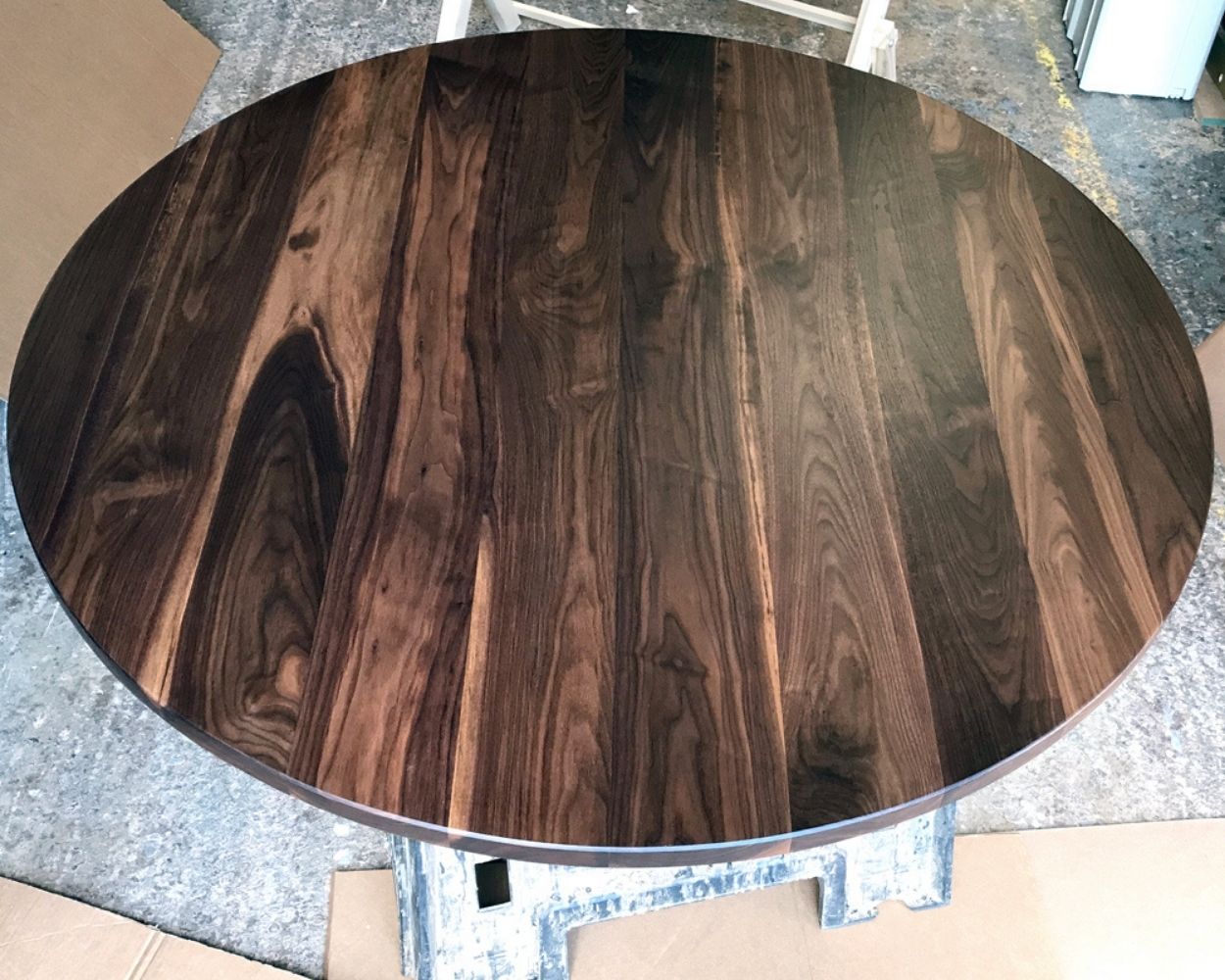
For projects where the tabletop is meant to become a design feature, walnut is difficult to overlook. Its rich brown color and flowing grain create an upscale, welcoming appearance.
Walnut is somewhat softer than oak or hard maple, but it remains a durable furniture wood. It is particularly effective in modern, transitional, and mid-century-inspired interiors.
4. Cherry: A Wood That Gets Better With Age
Cherry offers warm reddish-brown tones and a fine grain. One of its defining qualities is that its color deepens with light exposure over time. That makes it a strong choice for traditional, transitional, and timeless interiors.
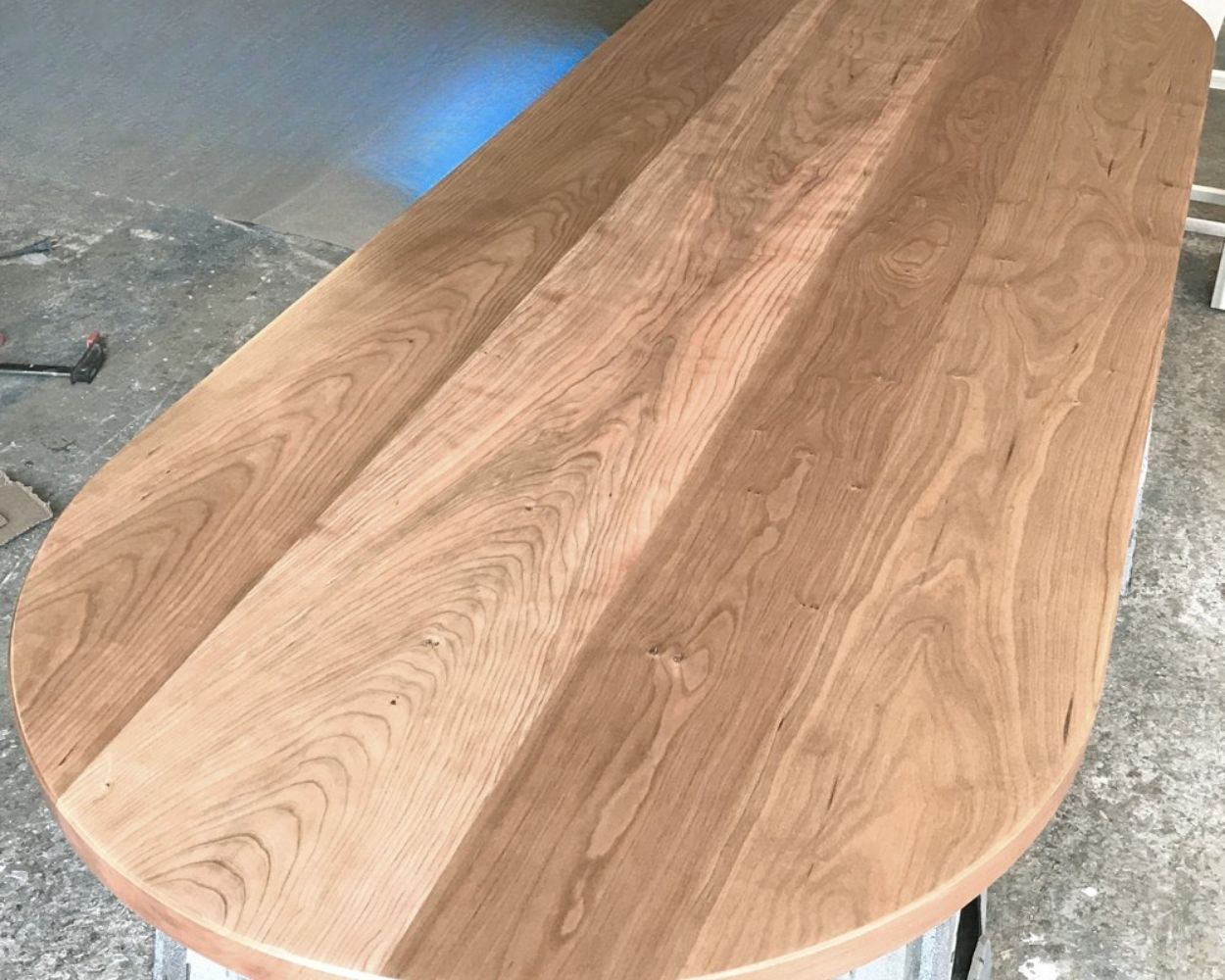
5. Ash: Strong Character at a Practical Price
Ash deserves consideration when you want prominent grain without the premium associated with some walnut selections. It has a bold, energetic appearance and works well in contemporary and rustic-inspired furniture.
The Finish and Construction Matter
The wood species is only part of the equation. A quality finish protects the surface from moisture, stains, and everyday wear, while proper construction must allow solid wood to expand and contract with changes in humidity. Wide tabletops require particular attention to wood movement and joinery.
The bottom line: For a versatile, durable tabletop, white oak is an excellent all-around choice. Choose hard maple for a clean, hard-wearing surface, walnut for luxury and warmth, cherry for timeless character, and ash for distinctive grain and value. The best wood is ultimately the one that supports both the design vision and the demands of the space.