Oak vs Walnut: Which Wood Is Better for High-Quality Tables?
Choosing the right wood for a table is a decision that affects durability, style, and how the piece ages over time. Oak and walnut remain two of the most trusted hardwoods for furniture, and for good reason. Both offer strength, character, and versatility, but they bring very different qualities to a space. Knowing these differences helps designers and remodeling professionals match each project with the right material.
Oak
Oak is a classic in both residential and commercial settings. Its grain is easy to recognize, full of texture and pattern. For spaces that need a sense of warmth or organic movement, oak delivers. It also performs well in everyday use. Oak is a tough hardwood with strong resistance to dents and wear, which makes it ideal for dining tables, family rooms, and high-traffic spaces. If the project calls for a lighter, brighter palette, oak’s natural tone blends easily with coastal, Scandinavian, or modern farmhouse interiors.
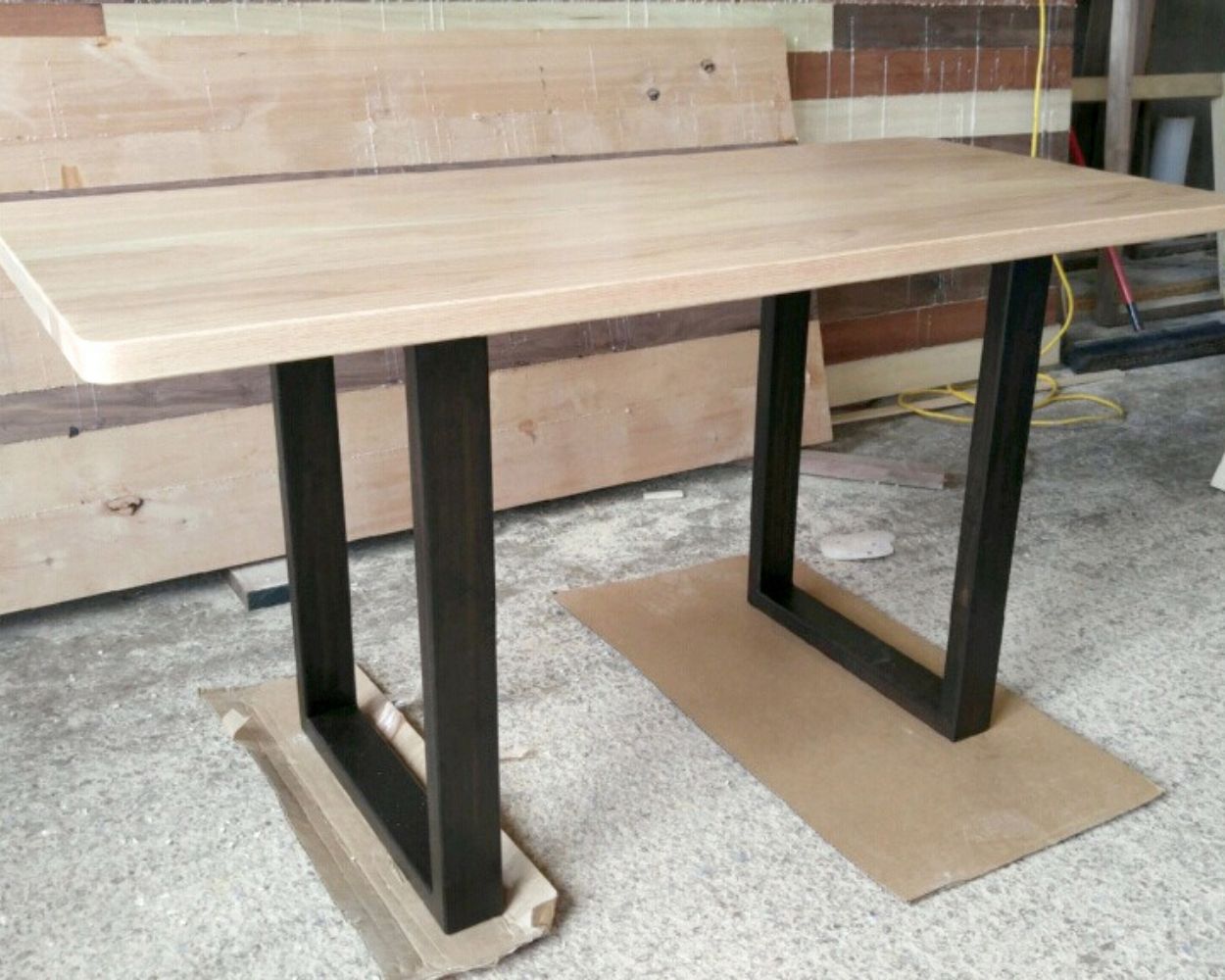
DT-90334_TL-80062-Red oak table top round corners on espresso finish base
Another advantage of oak is its versatility with finishes. It can be stained to bring out more depth, but it also looks clean and modern when treated with a natural, matte finish. Designers who want a table that’s durable, approachable, and easy to pair with other materials often lean toward oak. It feels familiar without becoming predictable.
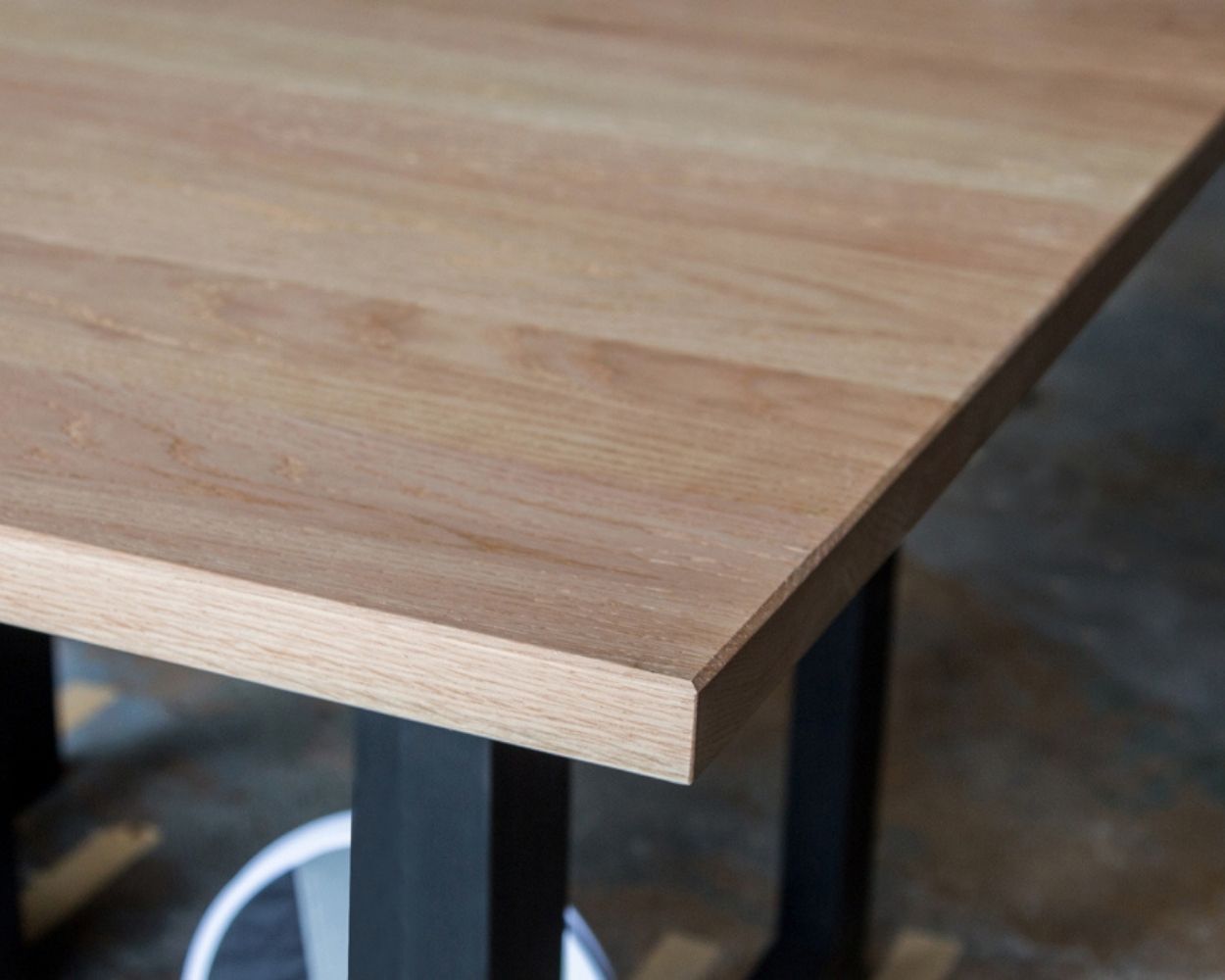
DT-90334 – The standard chamfer edges on a red oak table top
Walnut
Walnut, on the other hand, brings a different level of sophistication. Its rich, dark brown tones and smoother grain create an immediate sense of luxury. Walnut works especially well in modern, contemporary, and mid-century spaces, where clean lines and refined textures are central to the design. While walnut is also a hardwood, it has a slightly softer feel than oak, making it better suited for spaces where the table is treated more as a feature than a workhorse.
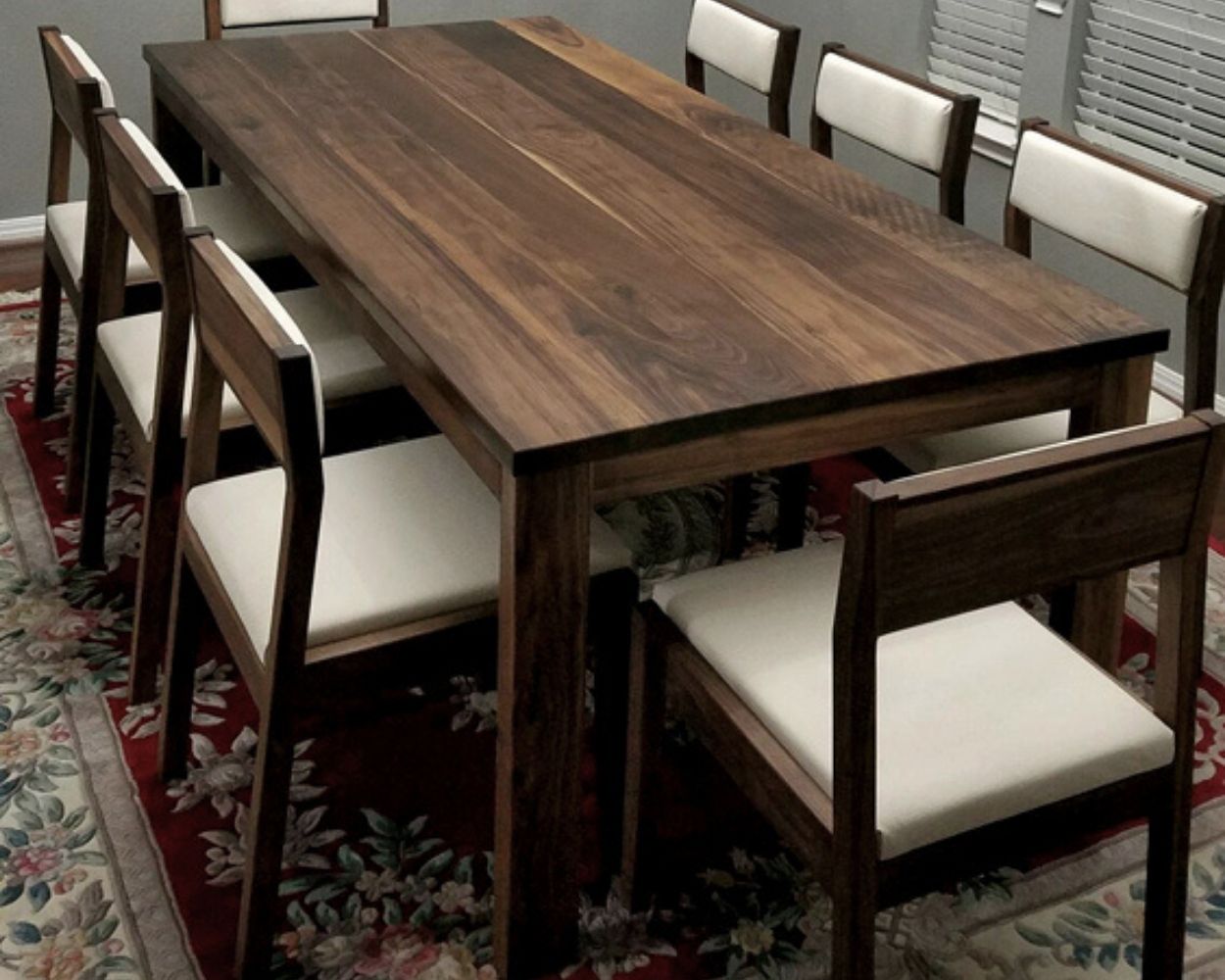
DT-90314_TL-80005 – Walnut table in a customer’s dining area
One of walnut’s biggest strengths is its depth of color. Even with a simple clear finish, walnut develops a beautiful patina over time. The grain is tight and elegant, giving the table a more polished look. For designers aiming to create contrast against light floors or pale walls, walnut brings weight and presence that oak cannot match. It gives the room an anchor without overwhelming it.
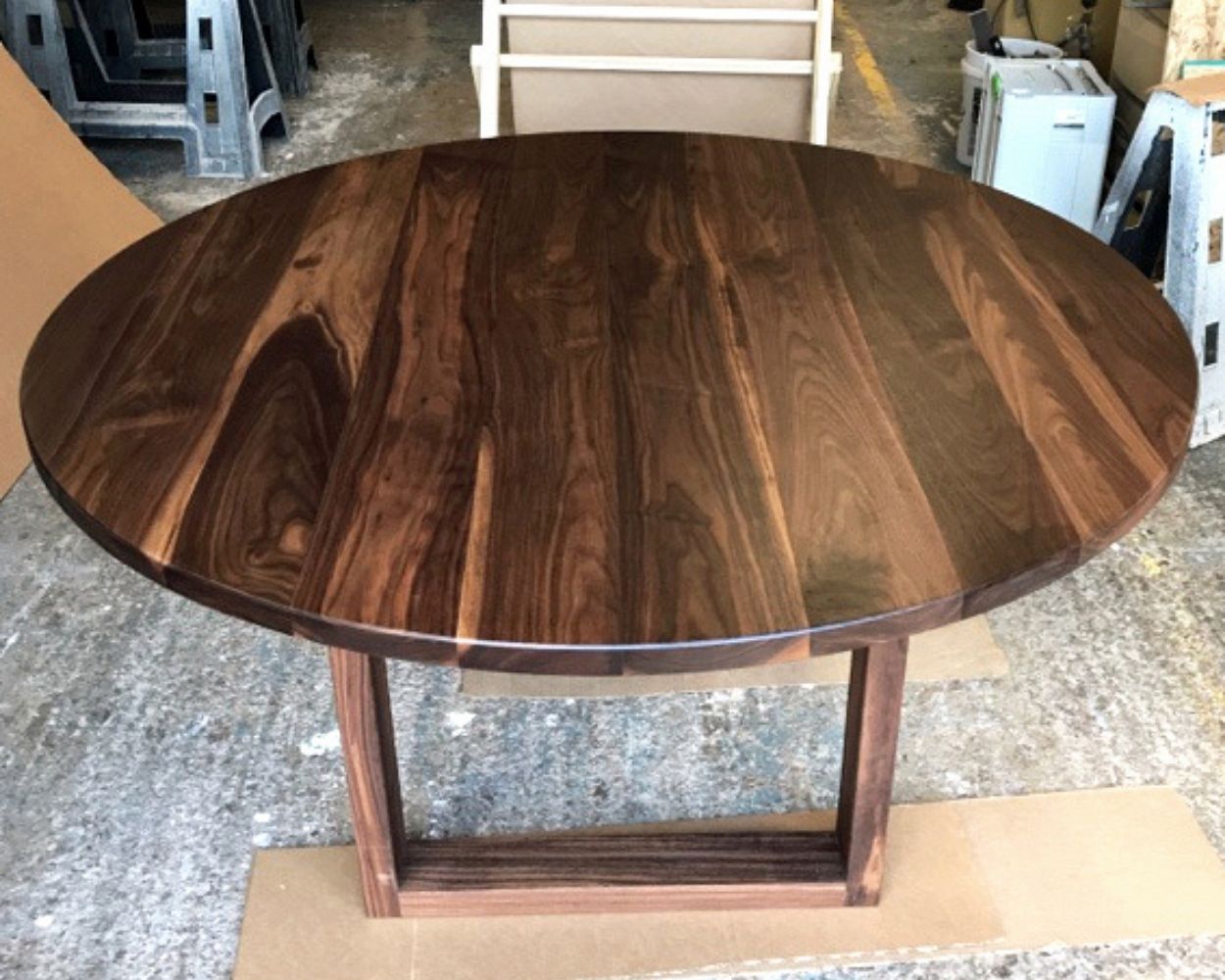
DT-90315_TL-80073 – 60-inch wide round walnut table top and base
When comparing durability, oak has a slight edge, especially in homes with kids or in commercial environments. Walnut is still strong and stable, but its beauty comes from its refined look, not its ruggedness. Both woods age well, though they do so differently. Oak lightens gently as it wears, while walnut softens into a warm, golden brown.
So which wood is better? It depends entirely on the needs of the space. Choose oak when durability, light color, and strong grain are priorities. Choose walnut when the goal is sophistication, contrast, and a smooth, rich finish. Both options offer long-lasting quality. The right choice comes from matching the wood’s character to the project’s vision.