What to Look for When Buying a Solid Wood Dining Table
A solid wood dining table is often the heart of a home. It hosts daily meals, long conversations, and gatherings that last for years. Because of that, choosing the right one goes far beyond appearance. For interior designers, remodeling companies, and home design professionals, understanding what defines quality helps ensure the table performs as well as it looks.
1. Wood Species
Start with the wood species. Not all solid wood offers the same durability or visual character. Hardwoods like oak, walnut, maple, and ash are strong, stable, and well-suited for dining tables. Oak is known for its durability and pronounced grain, making it ideal for high-traffic households. Walnut offers a richer tone and smoother grain, often preferred in contemporary or formal dining spaces. Maple provides a clean, even surface that works well in modern designs. The right choice depends on the style of the space and how the table will be used.
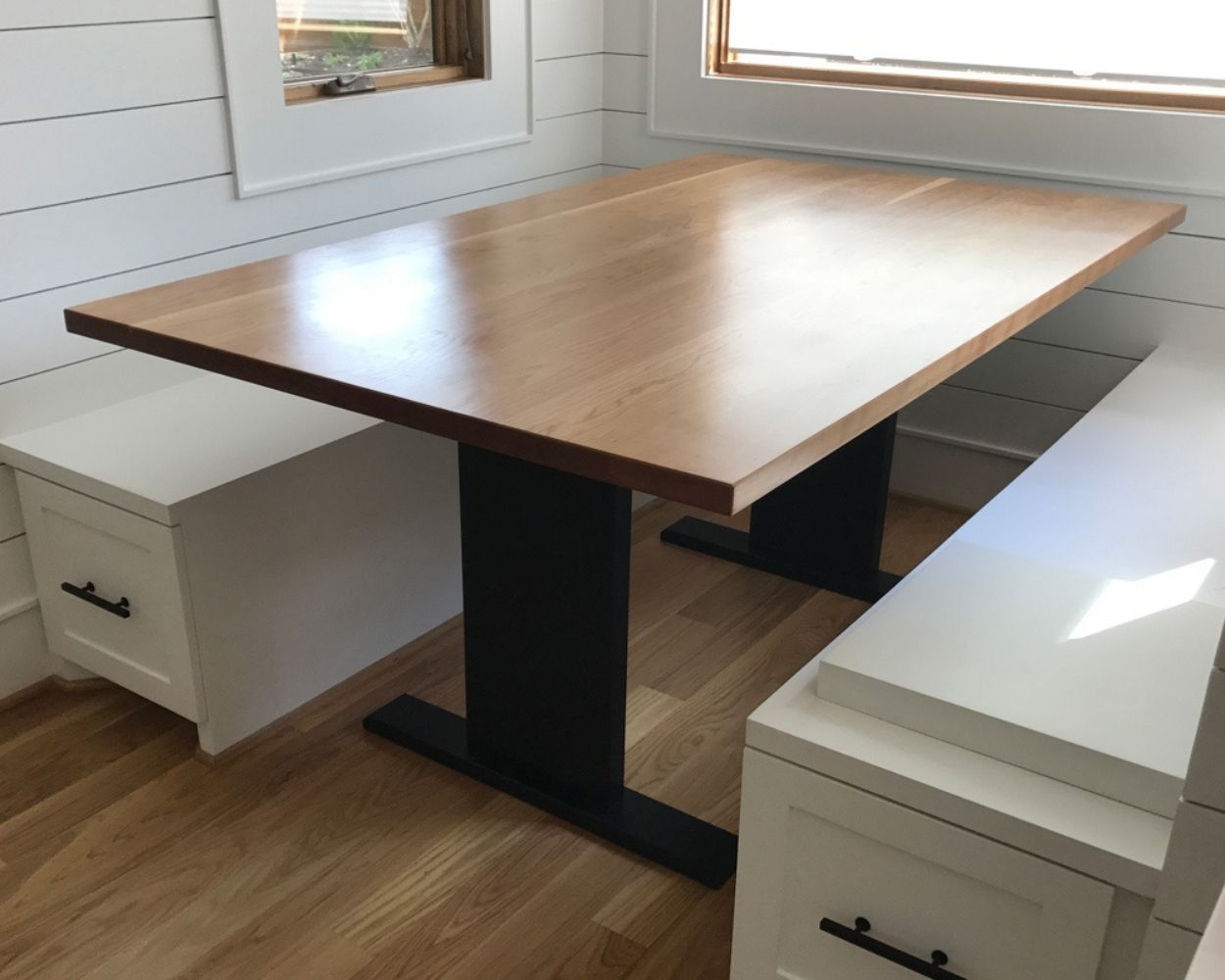
DT-90289-Rustic alder table top
2. Construction and Joinery
Next, examine the construction and joinery. A true solid wood dining table should feel sturdy and grounded. Look underneath. Quality tables use traditional joinery such as mortise and tenon joints, dowels, or reinforced corner blocks. These methods allow the table to handle movement and weight without loosening over time. Avoid tables that rely heavily on staples, thin screws, or weak brackets. Good construction may not be flashy, but it determines how the table ages.
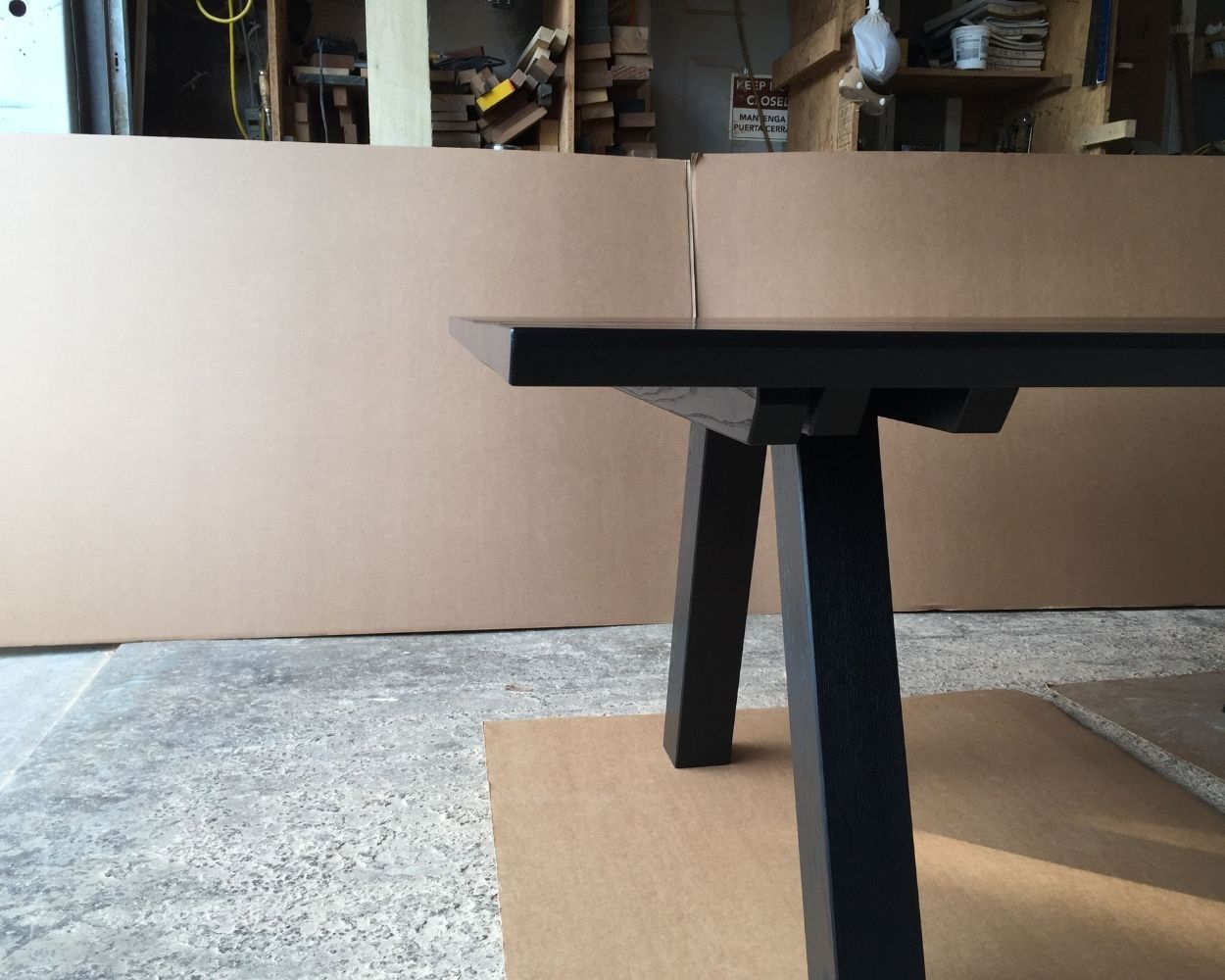
underside black stained walnut side table
3. Wood Movement
Pay close attention to wood movement. Solid wood naturally expands and contracts with changes in temperature and humidity. Well-made tables account for this through proper joinery and construction techniques. Slotted screw holes or floating fasteners allow the top to move slightly without cracking. This detail is especially important for designers specifying tables in climates with seasonal changes.
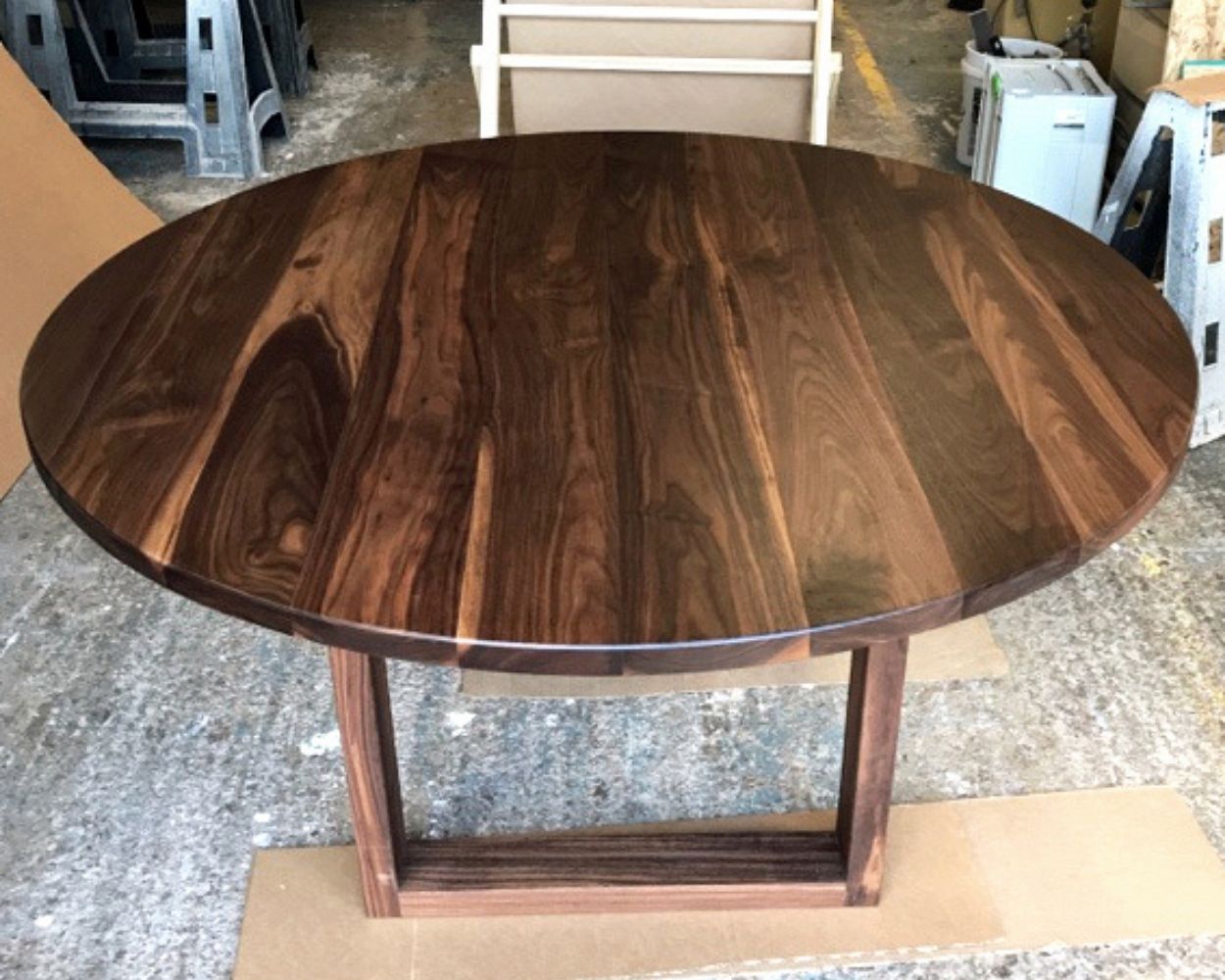
DT-90315_TL-80073 – 60 inch wide round walnut table top and base
4. Finish
The finish is another key factor. A quality finish protects the wood while enhancing its natural grain. Run your hand across the surface. It should feel smooth, consistent, and sealed. Matte and satin finishes are popular because they hide minor wear better than high-gloss options. For families or commercial projects, a durable protective finish helps prevent water marks and scratches. Uneven color, sticky surfaces, or visible drips are signs of rushed workmanship.
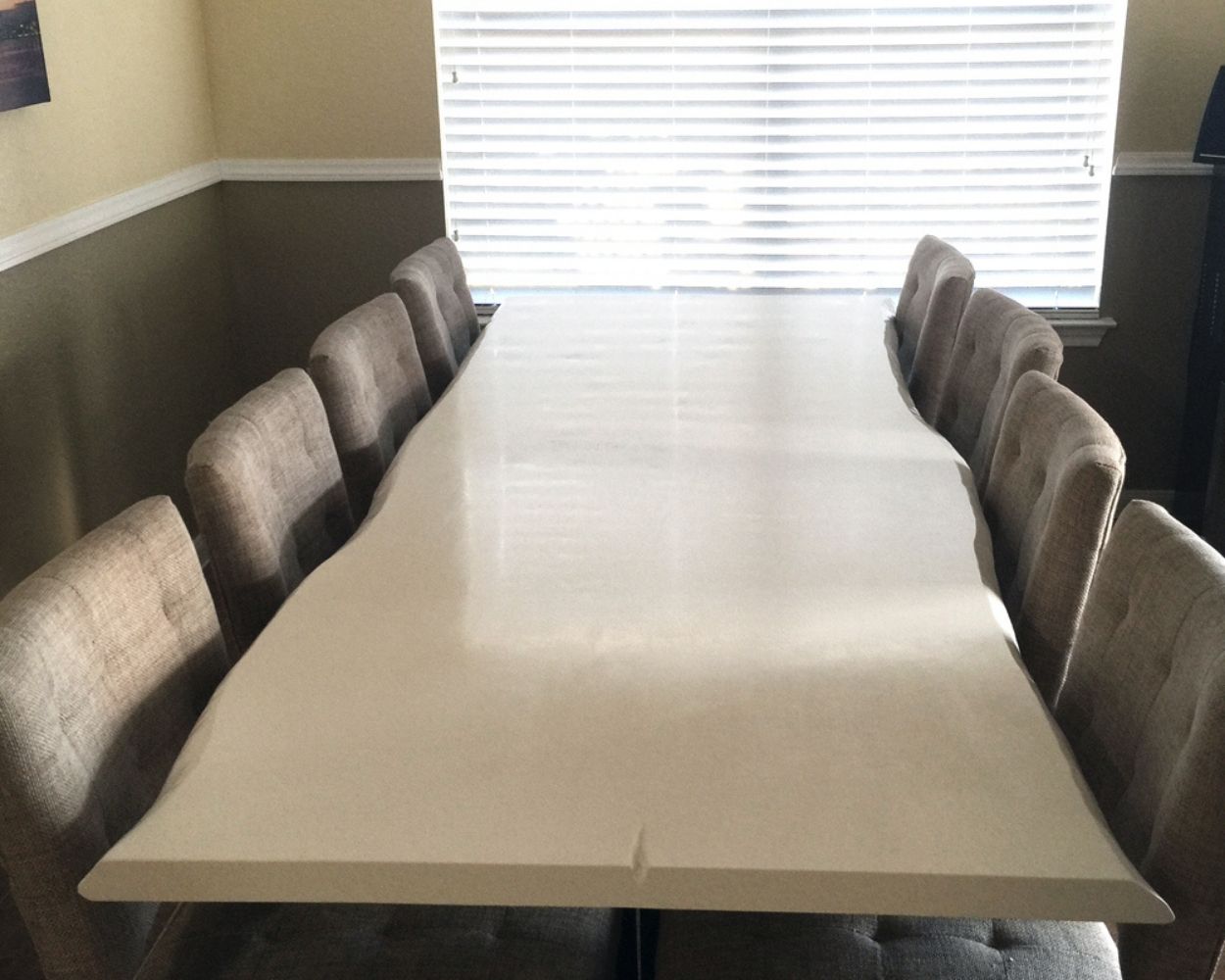
DT-90242_TL-80005-White table live-edge cut
5. Scale and Proportion
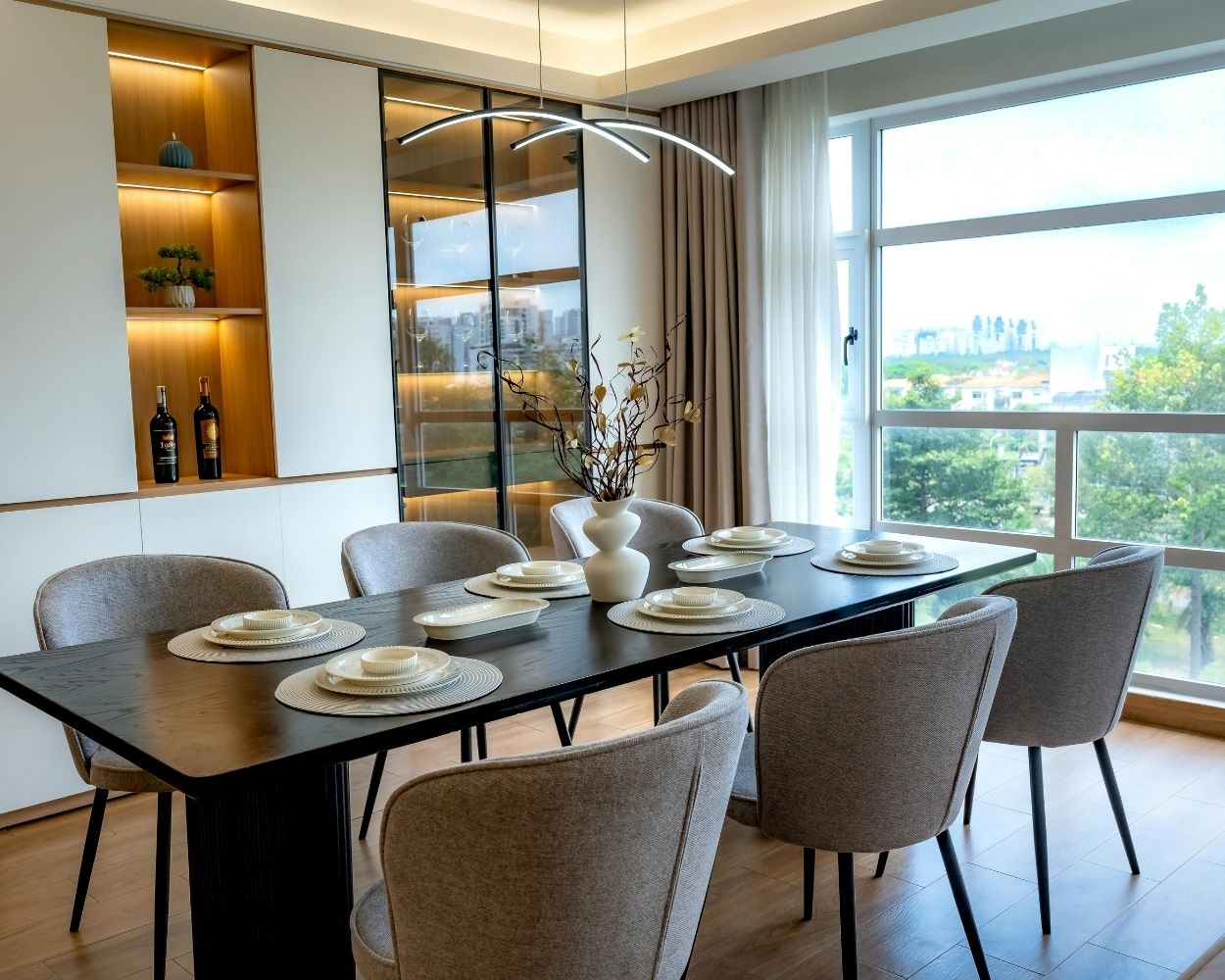
Scale and proportion should never be overlooked. A dining table must fit the room comfortably while allowing space for chairs and circulation. Designers typically recommend leaving at least three feet of clearance around the table. The table’s thickness, leg size, and overall mass should feel balanced with the room. A bulky table can overwhelm a small dining area, while a table that’s too light can feel out of place in a large space.
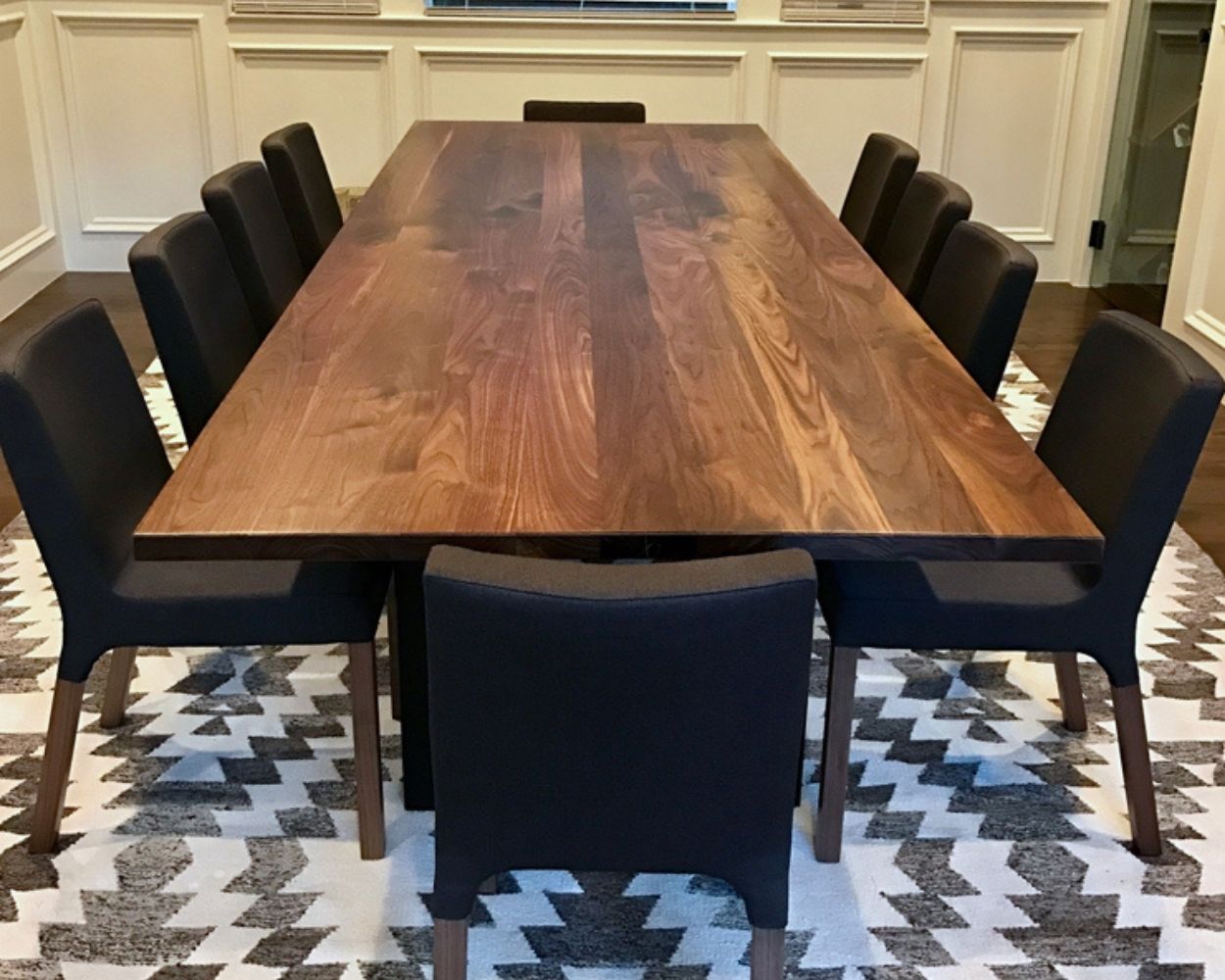
DT-90314_TL-80005-Walnut table
6. Long-term Use
Finally, consider long-term use. A solid wood dining table is an investment. Ask how the table will age, whether it can be refinished, and how easily it can be maintained. Solid wood offers the advantage of repairability. Scratches can be sanded out, finishes refreshed, and the table restored rather than replaced.
A well-chosen solid wood dining table brings warmth, structure, and longevity to a space. When designers and remodelers focus on material, construction, finish, and scale, they deliver a piece that earns its place at the center of the home.