Placing Mirrors Over Beds: Pros, Cons, and Design Tips for Bedrooms
Mirrors are powerful design tools in residential interiors. They reflect light, add depth, and help balance a room visually. However, placing a mirror above a bed is a design decision that often raises questions among homeowners and professionals alike. While the approach can work well in certain situations, it also requires careful consideration.
For interior designers, remodeling companies, and home design professionals, understanding the pros and cons can help determine whether this design choice fits the overall concept of a bedroom.
The Pros of Placing Mirrors Over Beds
One of the primary advantages is increased light reflection. Bedrooms often have limited lighting compared to living areas, and a well-positioned mirror can help brighten the room. When placed across from a window or near a light source, the mirror reflects natural light and creates a more open feeling.
Another benefit is visual expansion. Mirrors help small bedrooms feel larger by reflecting space and extending sightlines. This can be especially useful in compact urban homes or guest rooms where square footage is limited.
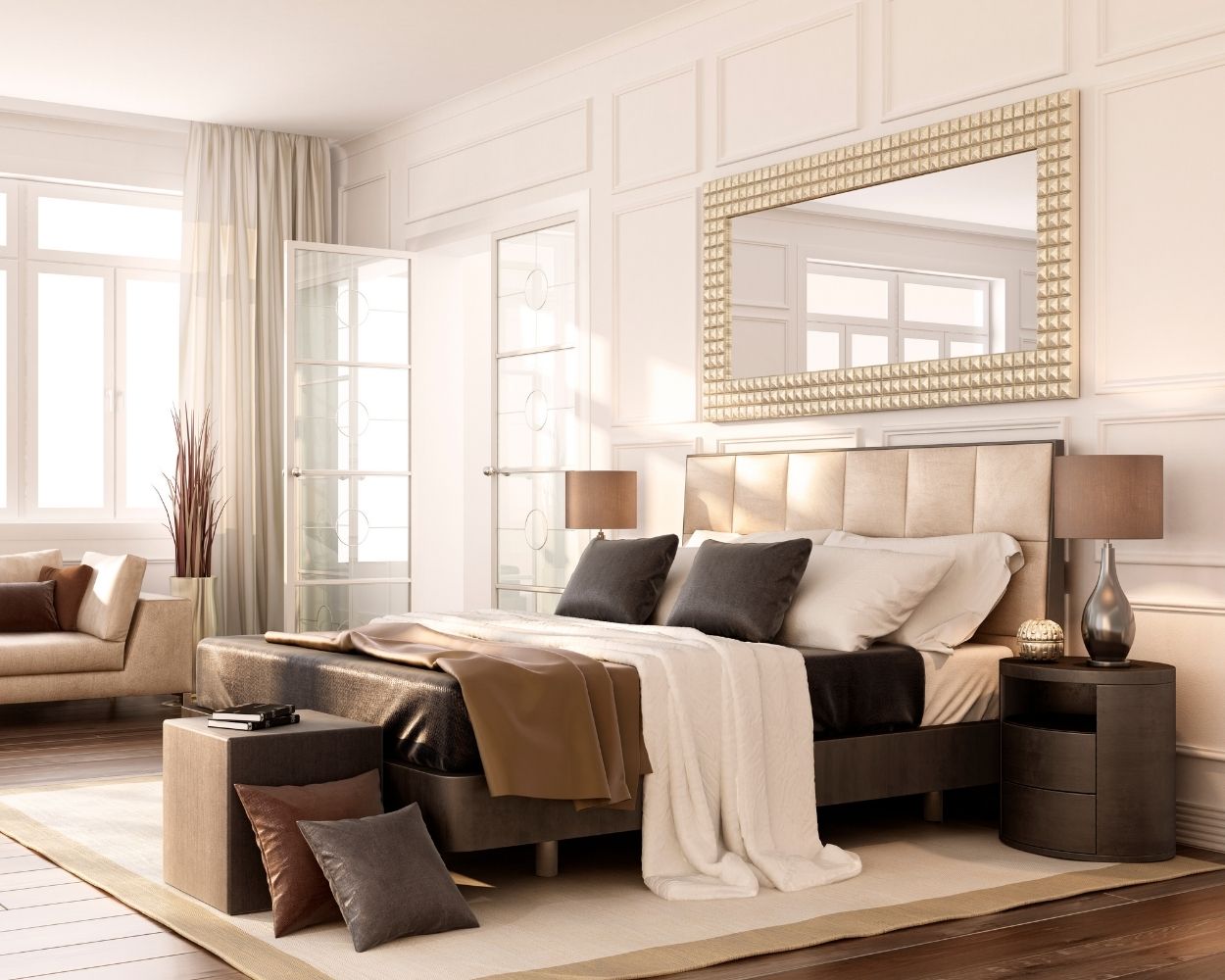
A mirror above the bed can also serve as a decorative focal point. In bedrooms where the wall behind the bed is relatively simple, a framed mirror can introduce texture and visual interest. Designers sometimes use large rectangular mirrors to create a balanced composition above the headboard.
The Cons to Consider
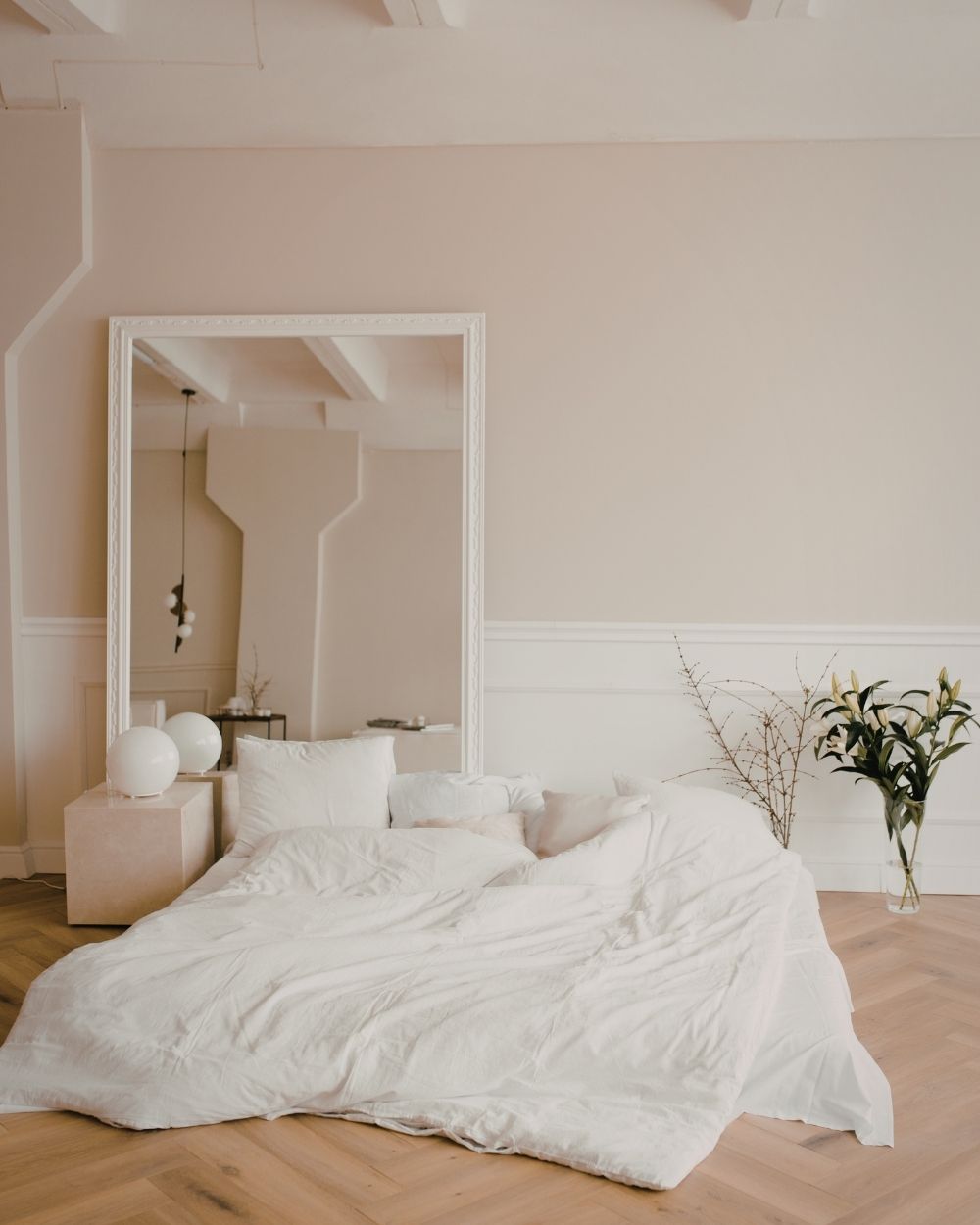
Despite these benefits, mirrors above beds are not always the best choice. One of the most common concerns is visual distraction. Because mirrors reflect movement and light, they can sometimes disrupt the calm atmosphere that a bedroom should provide.
Safety and installation are also important considerations. Mirrors must be mounted securely and positioned carefully. Large mirrors placed directly above a sleeping area require professional installation to ensure stability.
Another factor is aesthetic balance. The wall behind the bed is traditionally reserved for artwork, upholstered panels, or decorative headboards. In some designs, a mirror may appear too reflective or visually busy compared to softer elements like artwork or textiles.
Finally, mirrors can sometimes reflect clutter or unwanted views within the bedroom. Designers must carefully evaluate what the mirror will capture in its reflection before installation.
Professional Design Tips
If a mirror is used above a bed, proportion and framing matter. A framed mirror tends to integrate better into bedroom design because it adds structure and warmth. Thin black frames work well in contemporary interiors, while wood frames often suit transitional or organic design styles.
Rectangular mirrors are the most common choice because they align easily with the shape of the bed and headboard. Some designers also use a pair of smaller square mirrors to create symmetry.
Placement is also critical. The mirror should be centered above the bed and positioned at a comfortable height relative to the headboard. It should enhance the design rather than dominate the wall.
Placing a mirror above a bed can be a successful design choice when done thoughtfully. It can brighten the room, add depth, and create an interesting focal point. However, designers must carefully evaluate placement, scale, and reflection to maintain the restful atmosphere that bedrooms require.