How to Choose the Right Dining Table for Your Home
In many homes, the dining table does more than host meals. It’s where conversations happen, work gets done, and guests linger long after dessert. Choosing the right dining table is about more than style. It’s about proportion, flow, durability, and how people actually live.
Whether you’re designing a custom home or guiding a remodel, here’s how professionals approach the decision.
1. Start with the Room, Not the Table
The biggest mistake homeowners make is falling in love with a table before measuring the space. A dining table should fit comfortably within the room while allowing people to move around it with ease.
As a general rule, allow at least 36 inches of clearance on all sides. In tighter spaces, 42 inches is ideal if chairs will be pulled out frequently. For open-concept layouts, also consider sightlines. The table should feel anchored, not floating or cramped.
Designers often tape out dimensions on the floor to visualize scale before committing. It’s a simple step that prevents costly mistakes.
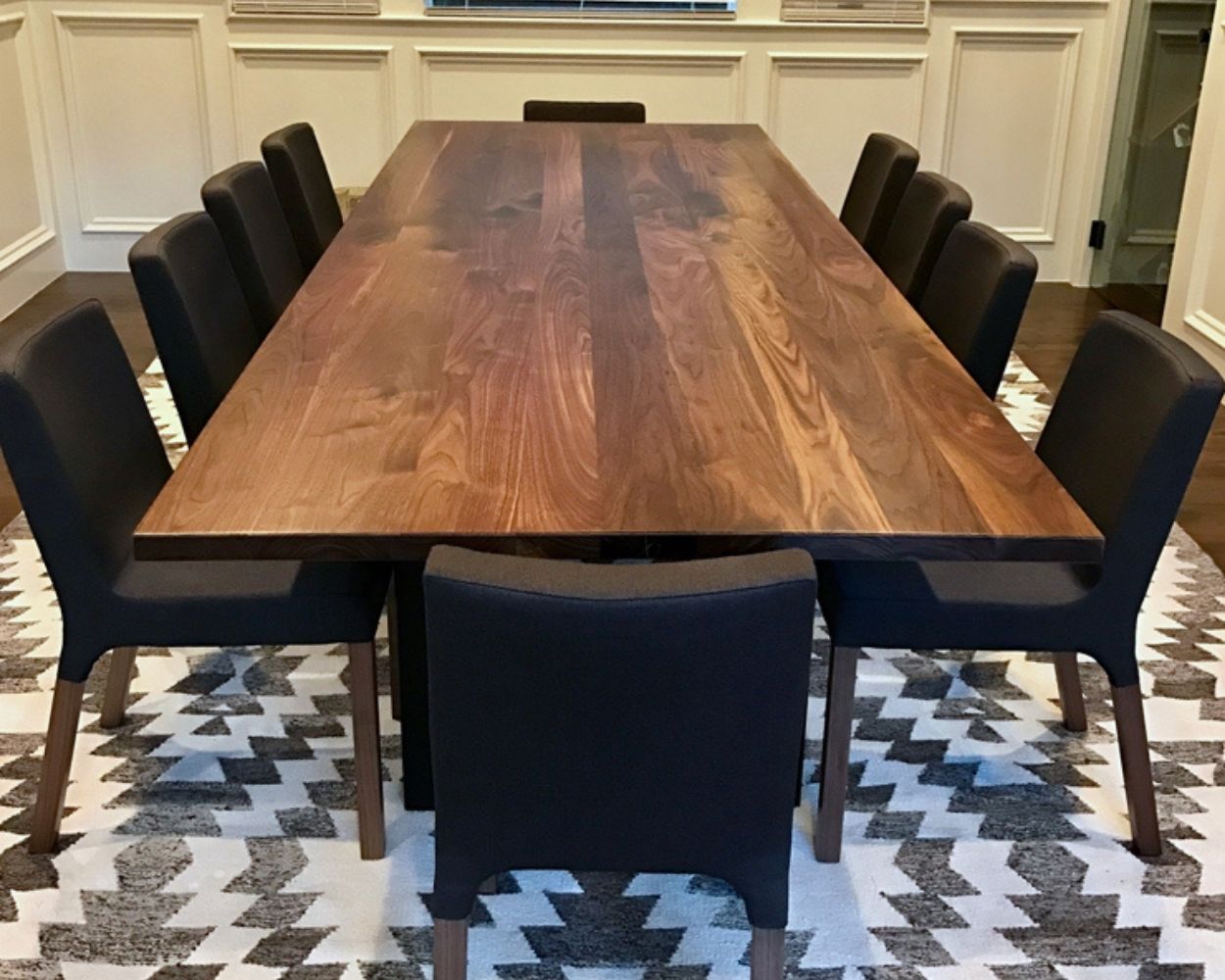
DT-90314_TL-80005-Walnut table
2. Choose the Right Shape
Table shape has a major impact on both function and atmosphere.
- Rectangular tables are the most versatile and work well in long or open dining rooms. They’re ideal for larger families and entertaining.
- Round tables encourage conversation and soften angular spaces. They’re excellent for smaller rooms but typically seat fewer people.
- Square tables feel modern and balanced, best suited for square rooms or intimate dining areas.
- Oval tables offer the flow of a round table with the seating capacity of a rectangle.
For remodelers, matching table shape to room architecture creates a more intentional design.
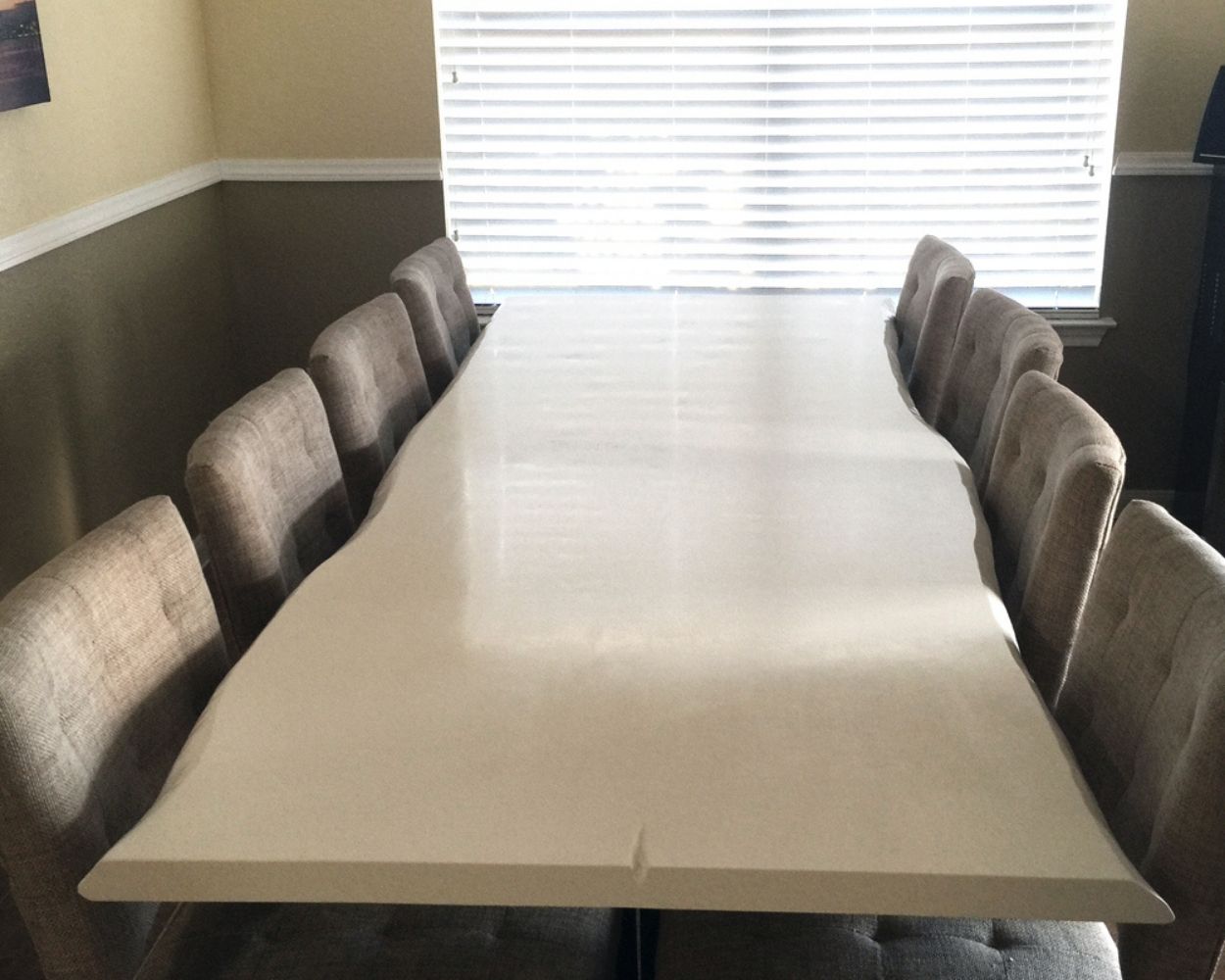
DT-90242_TL-80005-White table live-edge cut
3. Size for Everyday Life, Not Just Holidays
It’s tempting to size a table for maximum seating, but daily use matters more. A table that’s too large can make a room feel crowded and discourage casual meals.
Extendable tables are a smart solution. They provide flexibility without sacrificing comfort year-round. Designers often recommend them for clients who entertain occasionally but value open space daily.
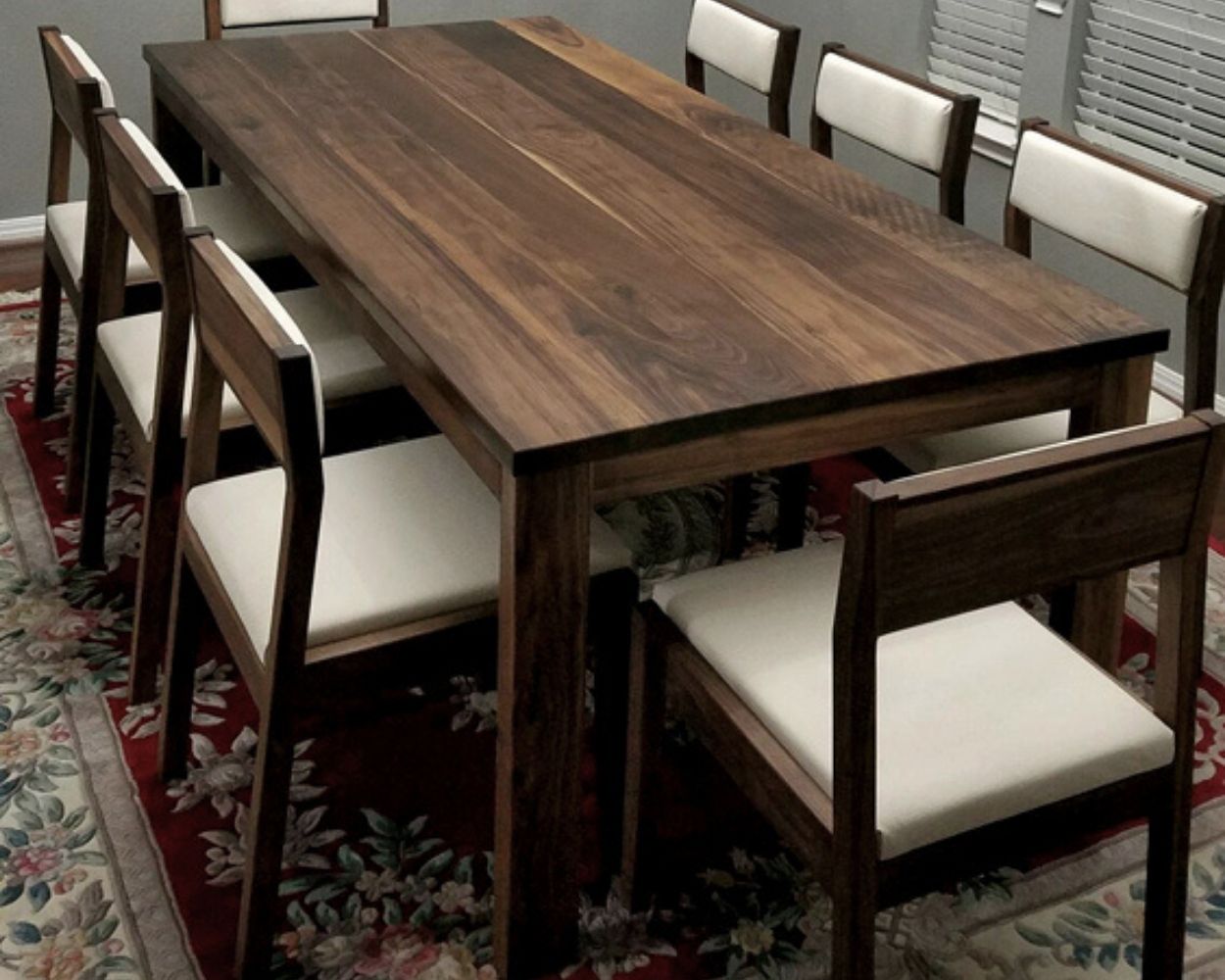
DT-90314_TL-80005 – Walnut table in a customer’s dining area
4. Material Matters More Than You Think
Dining tables take a lot of wear. Scratches, spills, and heat are inevitable.
- Solid wood offers warmth and longevity, aging gracefully over time.
- Stone or marble feels elevated but requires sealing and maintenance.
- Glass opens up smaller spaces but shows fingerprints easily.
- Engineered wood or veneers can offer durability at a lower cost when well-made.
The right choice depends on lifestyle, not trends.
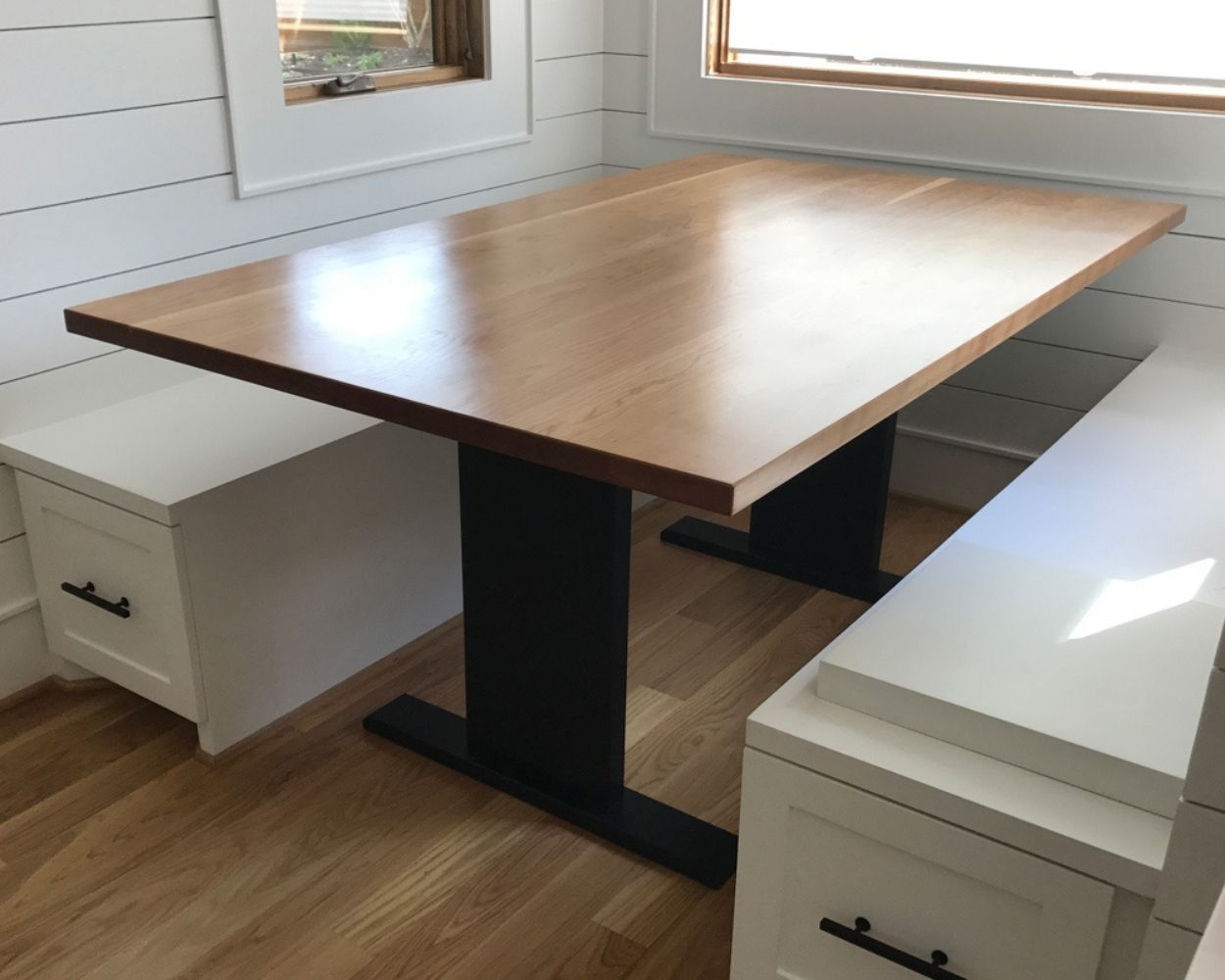
DT-90289-Rustic-alder-table-top
5. Balance Style with the Rest of the Home
A dining table should feel connected to the overall design language of the home. Match tones and finishes rather than exact materials. For example, a warm wood table pairs beautifully with mixed metal lighting or upholstered chairs.
For design professionals, the dining table often acts as a bridge between kitchen and living spaces, visually tying everything together.
A well-chosen dining table supports how people live, gather, and connect. When size, shape, material, and placement work in harmony, the table becomes a lasting foundation for everyday life and meaningful moments.