How to Choose Big Mirrors for a Home Gym
Adding big mirrors to a home gym can transform a workout space from ordinary to professional. Not only do mirrors help users check posture and technique, they also make rooms feel larger and brighter, enhancing both performance and design. As interior designers and remodeling professionals know, choosing the right mirrors is about function, safety, and visual impact.
Why Big Mirrors Matter in a Home Gym
In fitness spaces, mirrors are more than decorative walls. They serve a purpose. Large mirrors allow exercisers to monitor form in real-time, which reduces the risk of injury and improves workout efficiency. This is especially true for strength training, yoga, Pilates, and mobility work. Proper reflection ensures users can correct posture and alignment during exercise.
Big mirrors also create the illusion of space. In smaller home gyms often in basements, guest rooms, or garages, a large mirror visually doubles the room’s depth and can make the environment feel open and inviting. Mirrors reflect both natural and artificial light, brightening the space and setting a more energetic tone.
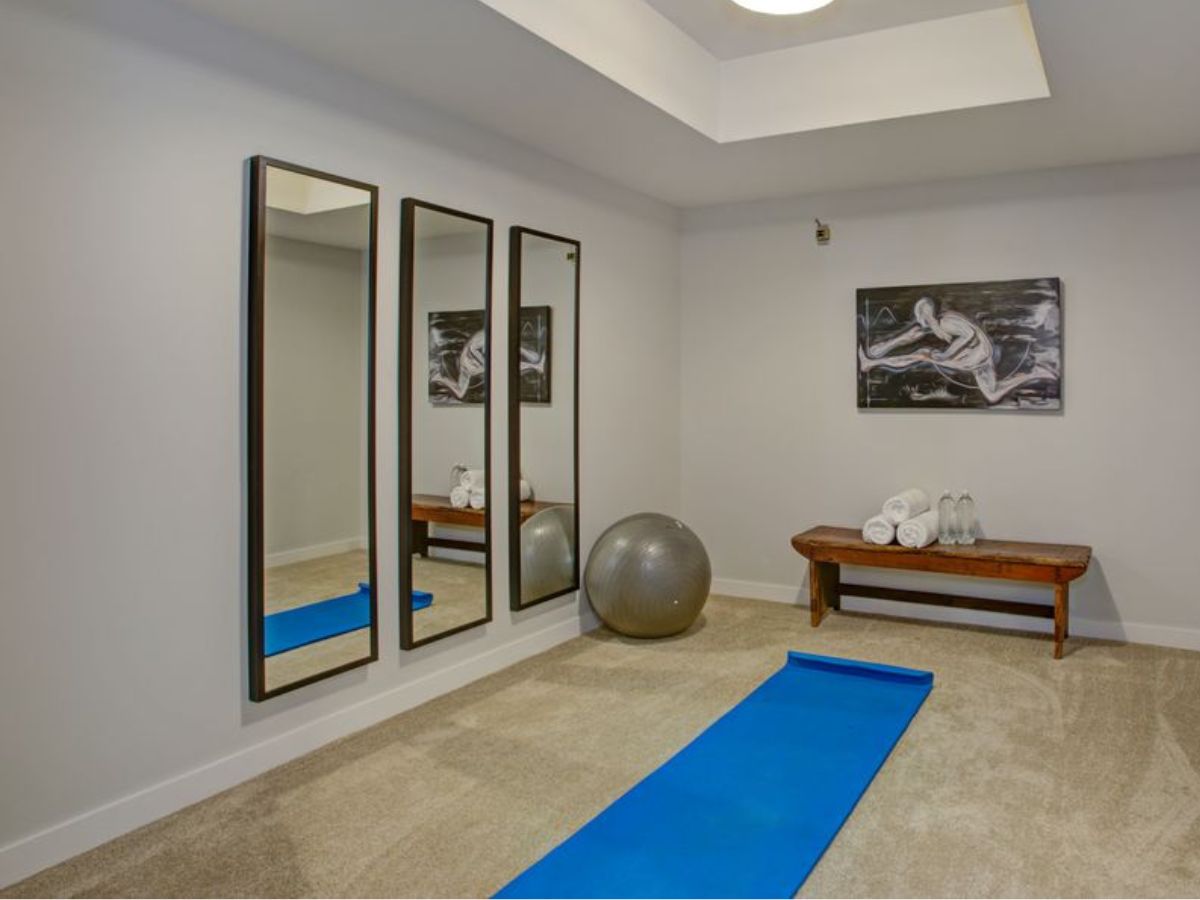
Choosing the Right Size and Shape
Measure before buying. Always start by measuring the wall height and width where you plan to install the mirror. A common rule of thumb is to choose mirrors that allow a full-body view without obstruction. For standard 8-10 foot ceilings, mirrors around 4-6 feet tall and 3-4 feet wide are effective, and larger mirrors work well with higher ceilings.
Rectangular mirrors are widely preferred because they offer clear, full-body visibility that supports most workout needs. Square and custom-sized mirrors can also work well, especially when creating mirror walls that wrap corners or cover multiple zones.
Custom sizes are often worth the investment. Tailored mirrors eliminate awkward gaps and make the mirror fit the exact dimensions of your gym wall, producing a more seamless and professional look.
Frame and Finish: Style Meets Durability
While frameless mirrors can look sleek, framed options offer two advantages. First, frames protect edges from chipping and wear, which matters in high-activity areas. Second, a well-chosen frame adds design cohesion whether it’s a modern brushed metal to match equipment finishes or warm wood to tie into a more residential gym vibe.
Work with finishes and textures that complement the overall interior design. For minimalist or luxury gyms, matte black or brushed steel frames add sophistication. For wellness spaces that double as multi-purpose rooms, warm or neutral tones create a softer, more inviting environment.

Placement Tips for Performance and Safety
- Place mirrors where workouts happen. For resistance training, position mirrors directly in front of barbells, racks, or weight benches. For yoga and flexibility work, mirrors along an open wall help with alignment from multiple angles.
- Safety is crucial. Use tempered glass or shatter-resistant mirrors, and secure them with commercial-grade hardware. Avoid placing mirrors behind rapidly moving equipment where impacts could cause damage.
- Consider lighting. Mirrors can amplify glare if placed directly opposite strong light sources, so opt for indirect lighting or position mirrors to enhance ambient brightness without uncomfortable reflections.
Make It Part of the Design
Large mirrors add functional value and design impact. A well-integrated mirror wall can elevate the gym’s aesthetic, making it feel like a boutique fitness space rather than a converted room. This can also add perceived value for homeowners and property developers alike.
Whether your project is a dedicated gym, a shared multipurpose space, or a basement renovation, choosing the right big mirror is a decision that balances performance, safety, and style.