Can a Floor Mirror Make a Room Look Bigger? Design Tips That Work
Floor mirrors are often used as decorative accents, but in professional interior design, they serve a much more strategic role. When placed correctly, a floor mirror can significantly increase the sense of space in a room. For interior designers, remodeling companies, and home design professionals, this makes them a valuable tool, especially in smaller homes or compact layouts.
So, can a floor mirror really make a room look bigger? The short answer is yes. But the impact depends on how it is selected and positioned.
How Floor Mirrors Create the Illusion of Space
Mirrors expand a room visually by reflecting both light and sightlines. A large floor mirror can double the perceived depth of a space by reflecting the opposite wall or an open area. This creates the impression that the room extends beyond its actual boundaries.
Natural light also plays a major role. When a floor mirror is positioned near a window, it reflects daylight deeper into the room. This not only brightens the space but also makes it feel more open and less confined.

The Importance of Size and Proportion
To achieve the best effect, the mirror must be appropriately sized. A small mirror will not have the same impact as a larger one. Floor mirrors, by nature, offer a larger reflective surface, which makes them more effective at expanding visual space.
Custom-sized mirrors can be especially useful when working with unique wall dimensions or tight layouts. Designers often select mirrors that align with the height of doors or furniture to maintain proportion and balance.
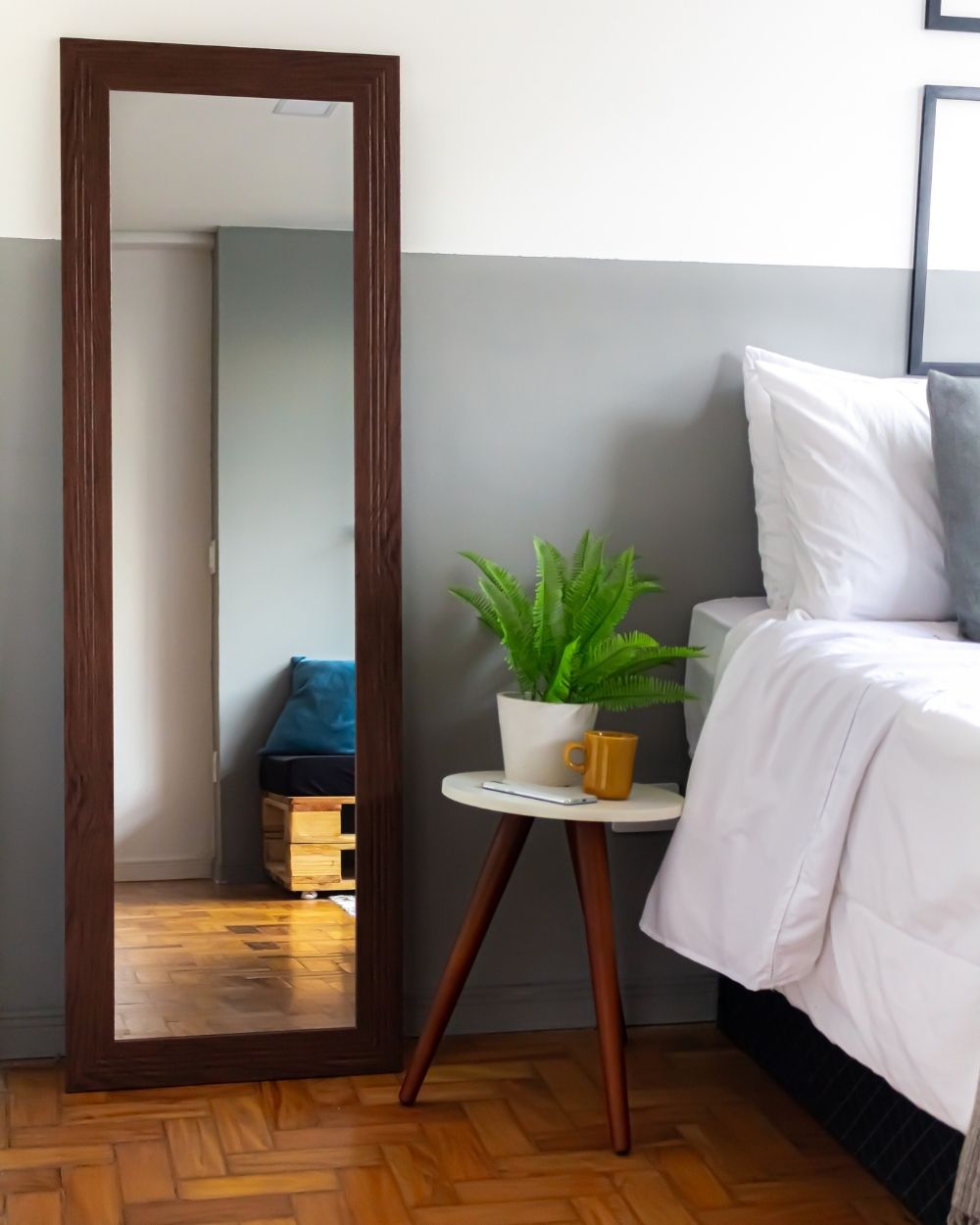
Framed floor mirrors also provide structure. A well-chosen frame helps anchor the mirror within the room while allowing it to complement other design elements such as flooring, furniture, and lighting.
Placement Strategies That Work
Placement is critical when using a floor mirror to make a room look bigger. One of the most effective strategies is to position the mirror opposite a window. This maximizes natural light and creates a brighter, more open environment.
Another approach is to place the mirror along a narrow wall or corner. This can visually widen tight spaces such as hallways or small bedrooms.
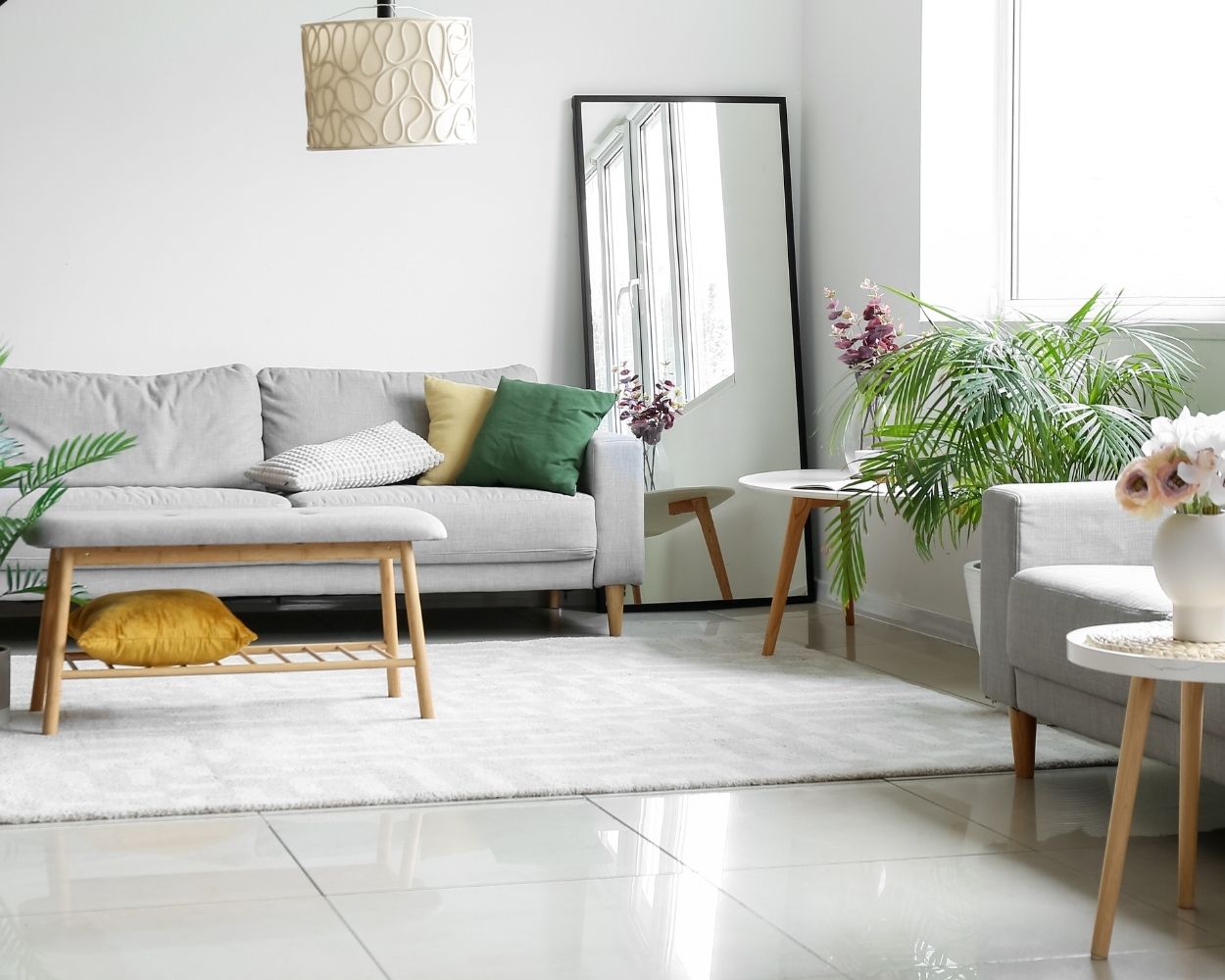
Leaning a floor mirror against the wall is a common design technique, especially in contemporary and transitional interiors. It offers flexibility and can soften the look of a space compared to a fully mounted mirror.
However, designers must also consider what the mirror reflects. Ideally, it should capture attractive features such as natural light, artwork, or architectural details rather than clutter or storage areas.
Framed vs. Frameless Options
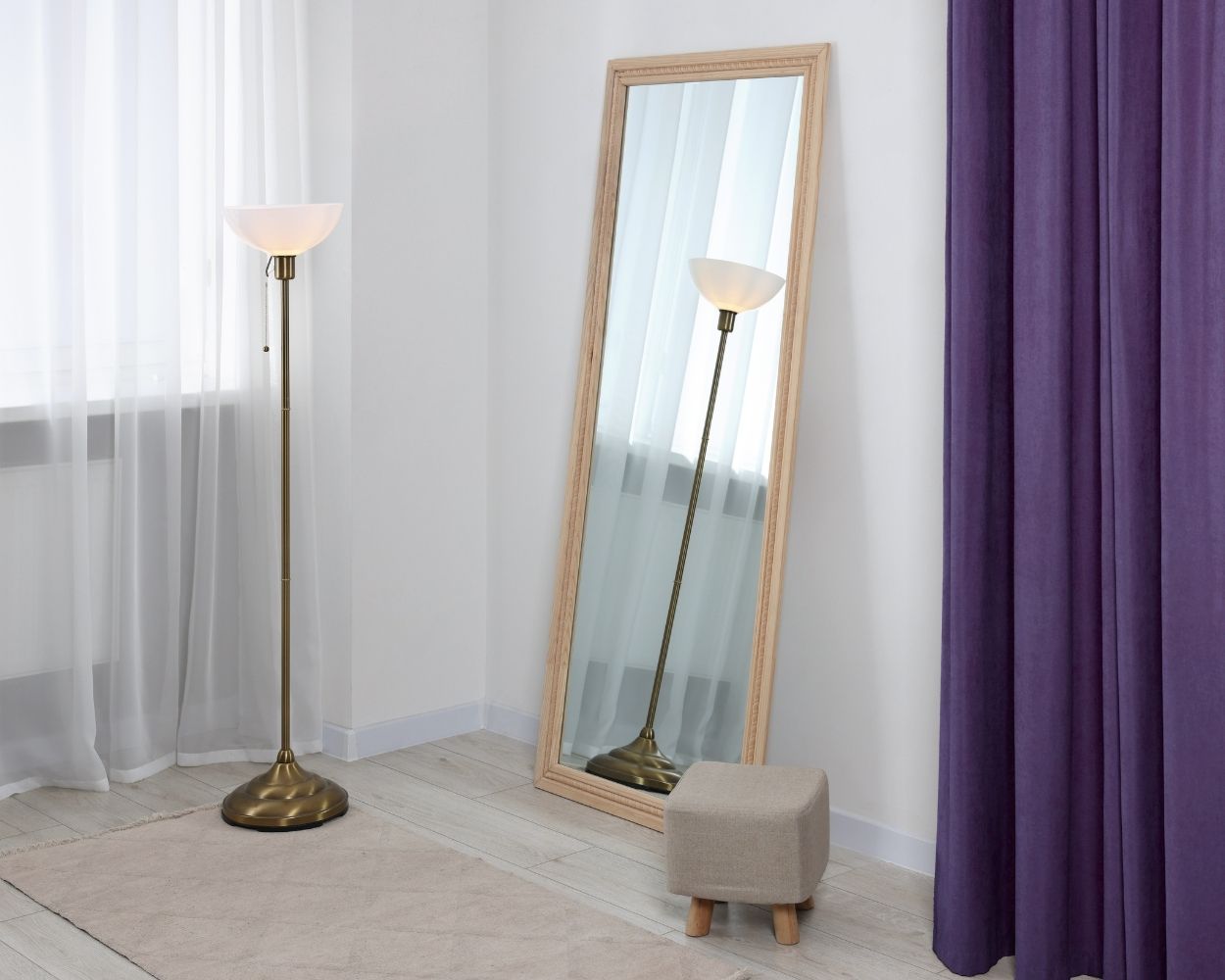
While frameless mirrors can work in minimalist interiors, framed mirrors are often preferred in residential design. Frames add depth and definition, helping the mirror feel like a deliberate part of the design rather than an afterthought.
Rectangular floor mirrors are the most versatile choice. Their vertical orientation draws the eye upward, which can make ceilings appear higher and the room feel more spacious.
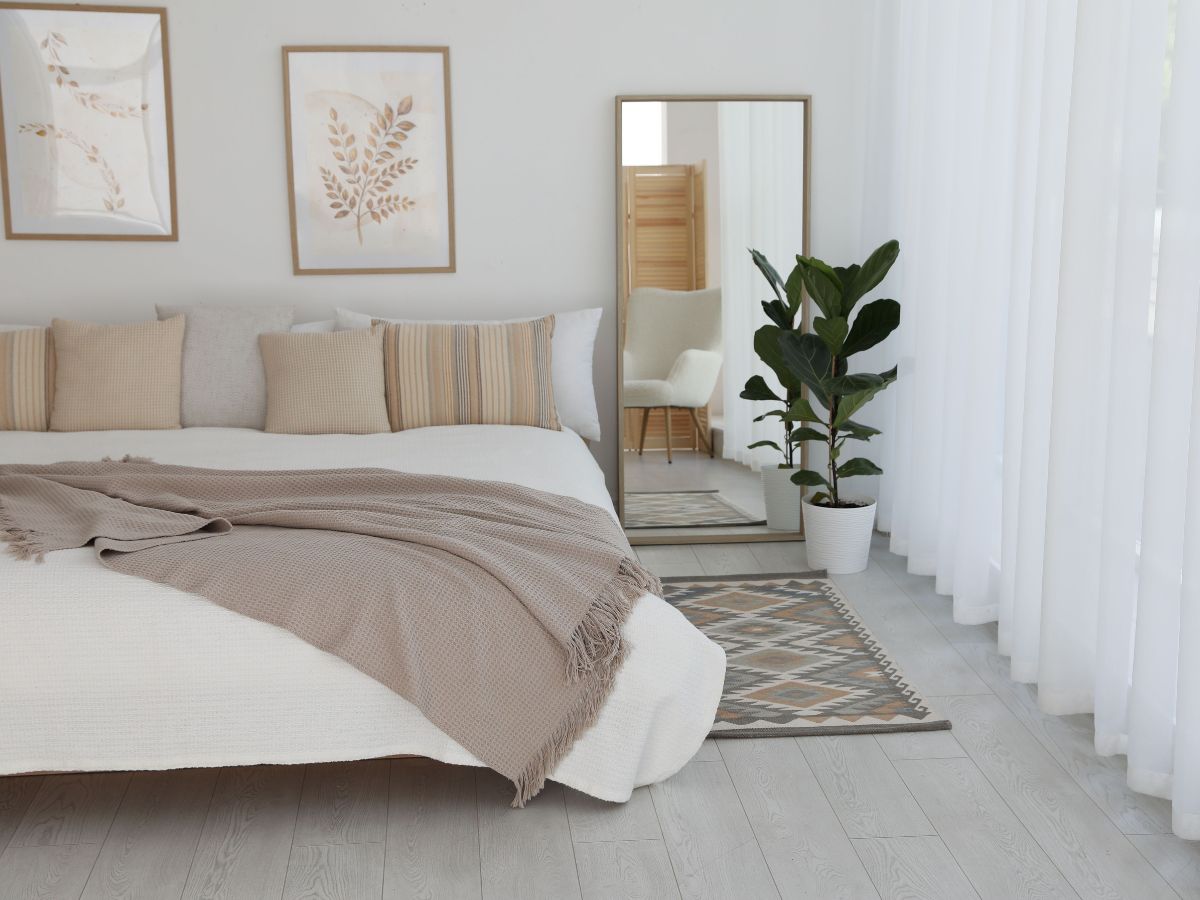
A floor mirror can absolutely make a room look bigger, but only when used with intention. Size, placement, and framing all influence the final result. For design professionals, floor mirrors are not just decorative pieces. They are functional tools that can enhance light, improve proportions, and transform how a space is experienced. When chosen and positioned carefully, a floor mirror becomes one of the simplest ways to elevate both the look and feel of a room.