Where Should a Mirror Be Placed in a Living Room? A Designer’s Guide
In living room design, mirrors are more than decorative accents. They shape how a space feels, how light moves, and how balanced the room appears. When placed with intention, a mirror enhances the room. When placed randomly, it can feel distracting or out of place.
Here’s how to determine the best mirror placement in a living room.
Above the Sofa: A Classic Placement That Works
One of the most common and effective locations for a mirror is above the sofa. This placement anchors the seating area and gives the wall a clear purpose. Rectangular mirrors work especially well here, echoing the horizontal lines of the sofa and helping the space feel wider.
Custom sizing is key. A mirror that’s too small feels lost, while one that’s too large overwhelms the seating area. Designers typically size the mirror to be about two-thirds the width of the sofa for visual balance. A framed mirror adds structure and helps the piece feel intentional rather than purely reflective.
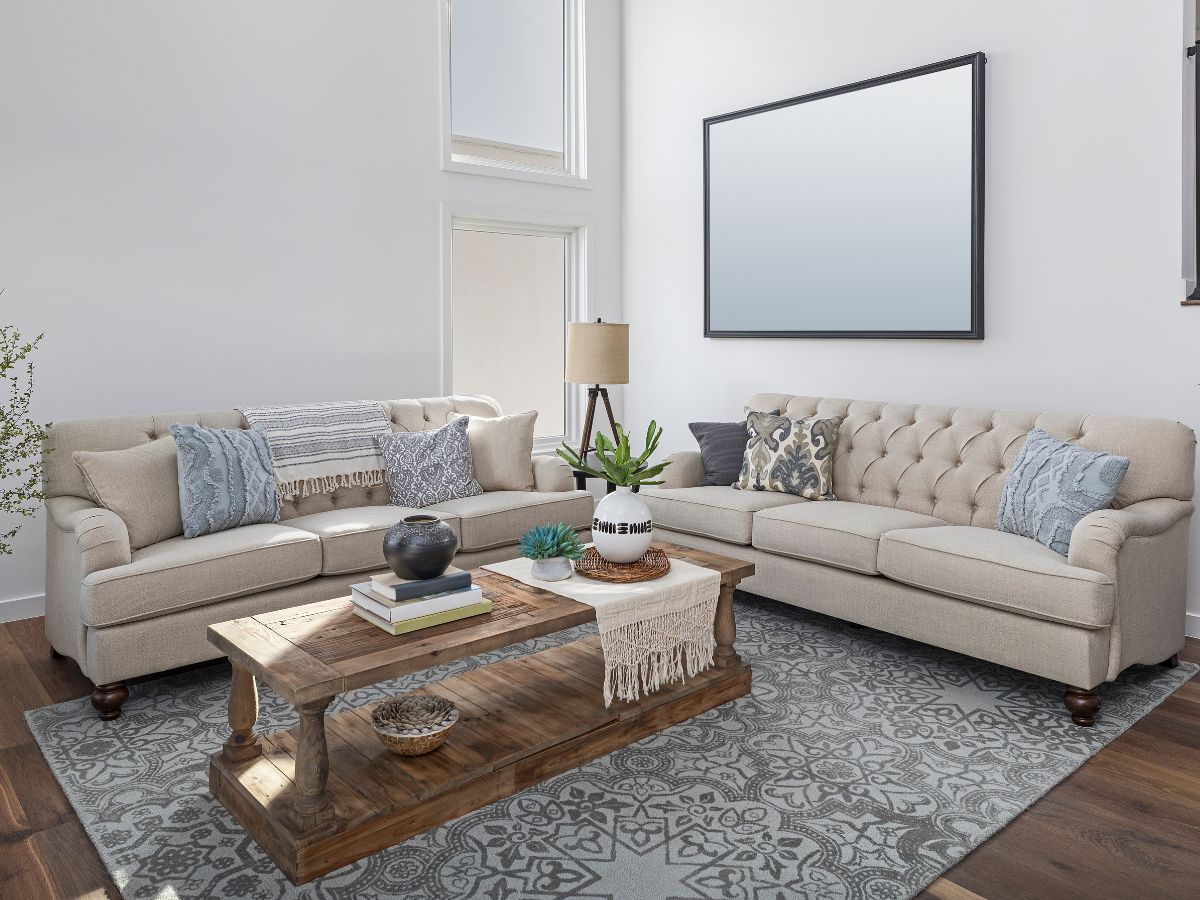
MAL-0698 Black Framed Mirror For Living Room
Across from a Window: Maximize Natural Light
Placing a mirror opposite or adjacent to a window is one of the most effective ways to brighten a living room. This strategy reflects natural light deeper into the space, making the room feel larger and more open.
In this scenario, square or vertical rectangular mirrors can be especially effective, depending on ceiling height and wall proportions. Framed mirrors help soften the reflection and prevent the mirror from feeling overly stark, especially in rooms with minimal decor.
Designers often use custom-sized mirrors here to align with window trim, wall panels, or architectural details.
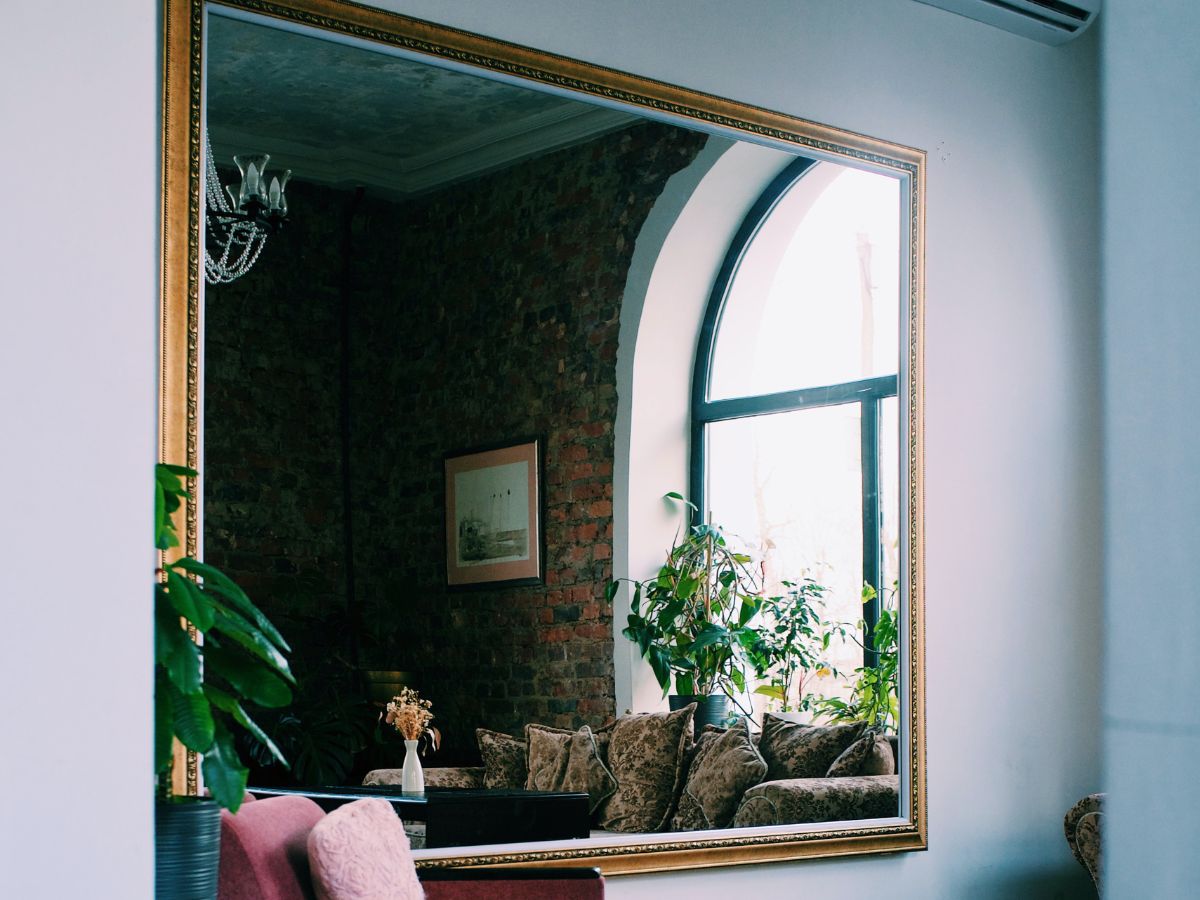
MAL-1303 Gold Framed Mirror for Living Room
Over a Console or Sideboard
A mirror placed above a console table or sideboard creates a strong focal point and works well in both formal and casual living rooms. This setup allows the mirror to function almost like artwork while still adding depth and light.
Square mirrors bring a modern, architectural feel to this arrangement, while rectangular mirrors offer a more traditional or transitional look. Framing becomes especially important in these placements, as the frame helps visually connect the mirror to the furniture below.
For remodels, this is a reliable solution when wall space is limited but impact is still desired.
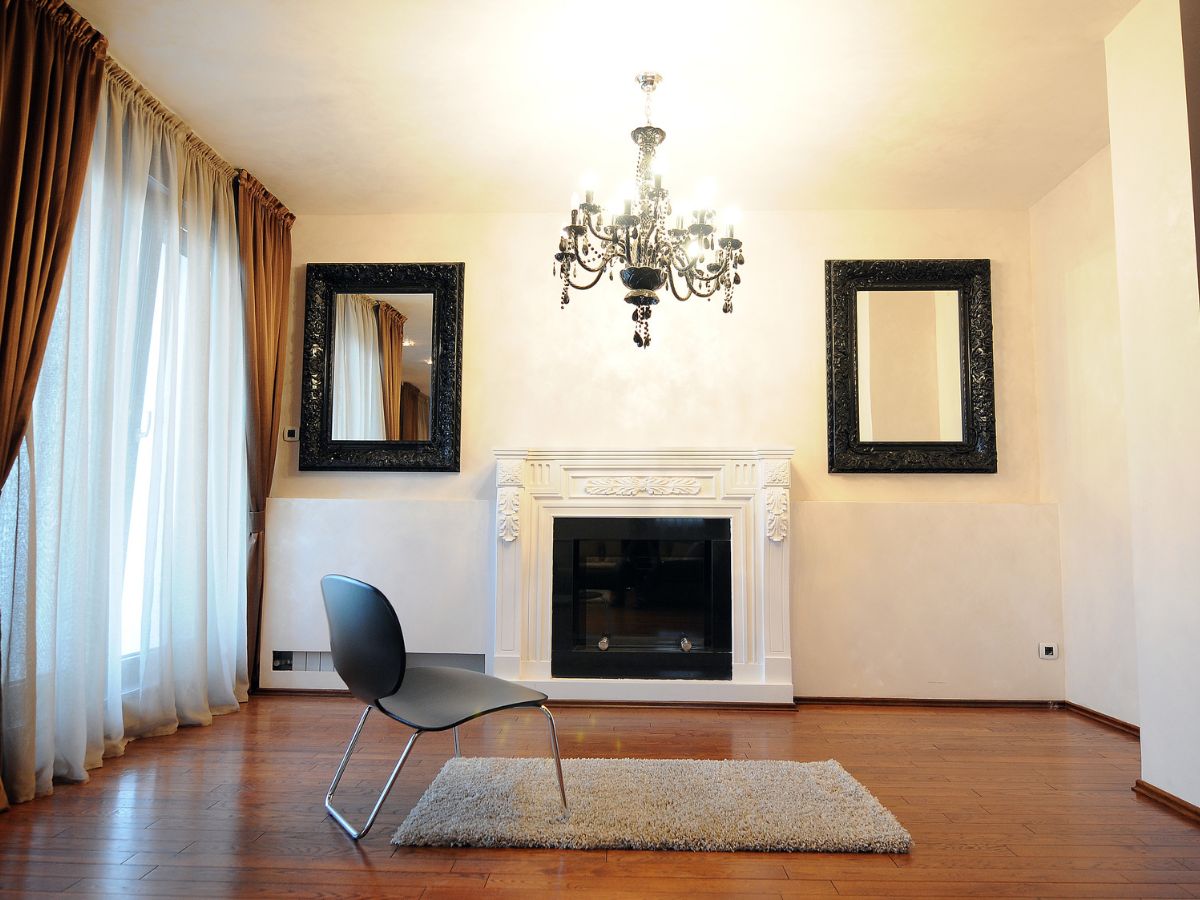
MAL-0392 Black Framed Mirror For Living Room
Avoid Reflecting Clutter or Dead Space
One of the most overlooked aspects of mirror placement is what the mirror reflects. A mirror will double whatever is in front of it, good or bad. Designers avoid placing mirrors where they reflect clutter, exposed storage, or blank walls with no visual interest.
Instead, aim to reflect light fixtures, artwork, architectural details, or greenery. This reinforces the room’s strongest features rather than highlighting its weaknesses.

MAL-0288 Silver Framed Mirror For Living Room
Leaning Mirrors for a Relaxed Look
Leaning mirrors can work beautifully in larger living rooms with sufficient floor space. Tall rectangular mirrors leaned against a wall add height and a relaxed, contemporary feel.

MAL-0399 Black Framed Mirror For Living Room
A mirror in the living room should feel purposeful. When thoughtfully placed and properly sized, mirrors become powerful design tools that enhance light, balance, and overall harmony. For interior designers and remodeling professionals, mirror placement is an opportunity to elevate the space without adding visual clutter.