What Home Decor Mistakes Should I Avoid When Hanging a Mirror?
Mirrors are powerful design tools. They reflect light, create depth, and anchor a space. But when hung incorrectly, they can feel awkward, distracting, or even reduce the impact of an otherwise well-designed room. For interior designers, remodelers, and home design professionals, understanding what not to do is just as important as knowing best practices.
Here are the most common home decor mistakes to avoid when hanging a mirror.
1. Hanging the Mirror Too High
One of the most frequent errors is placing a mirror too high on the wall. Mirrors should relate to the furniture beneath them, not float disconnected above it.
In living rooms, a mirror hung above a sofa or console should sit roughly 6 to 10 inches above the furniture. In bathrooms, the mirror should be centered at average eye level while still aligning with the vanity below. When mirrors are hung too high, they feel visually detached and disrupt the balance of the room.

2. Choosing the Wrong Size
Scale is everything. A mirror that is too small for the wall creates negative space that feels unfinished. A mirror that is too large can overpower the room.
As a general rule, a mirror above furniture should span about two-thirds to three-quarters of the furniture’s width. In bathrooms, the mirror should be slightly narrower than the vanity for a clean, intentional look. Custom sizing often solves proportion issues and delivers a more professional result.
3. Ignoring What the Mirror Reflects
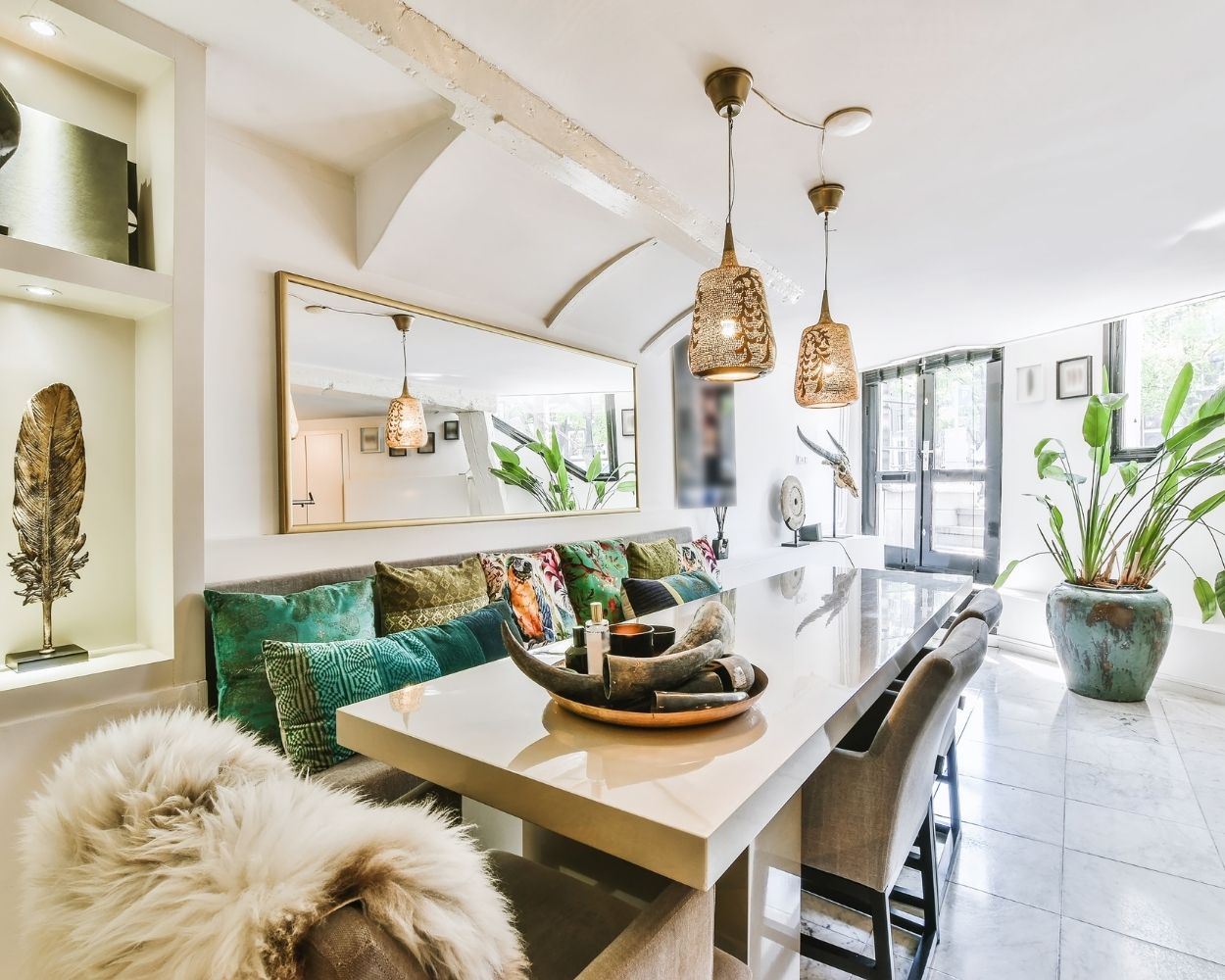
A mirror doubles whatever it faces. That includes clutter, blank walls, or unattractive views.
Before installing a mirror, stand in the intended position and evaluate what will be reflected. Ideally, mirrors should reflect natural light, architectural details, or attractive design elements. If the mirror faces a dark hallway or messy corner, it will amplify those negatives instead of enhancing the space.
4. Forgetting About Lighting
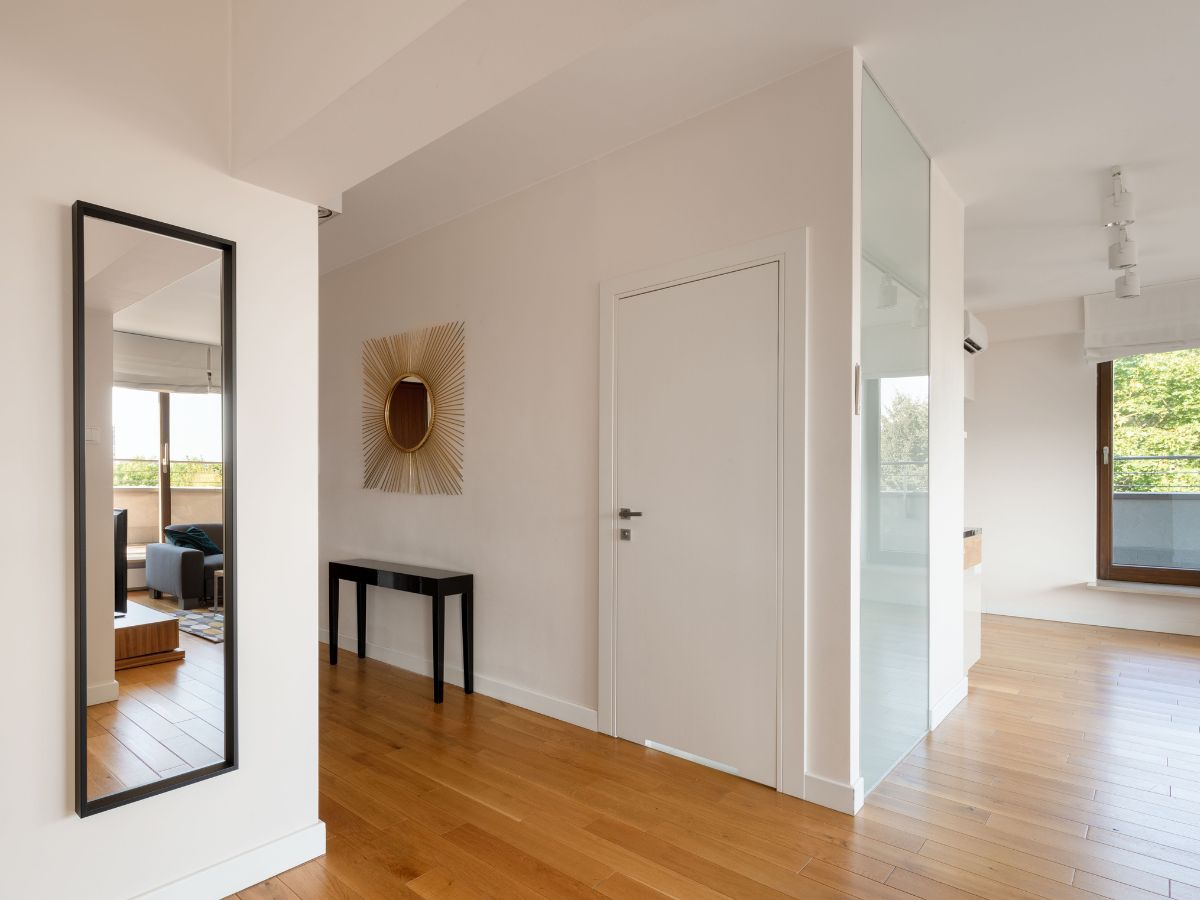
Mirrors and lighting work together. Poor lighting can make even a well-placed mirror feel ineffective.
In bathrooms, side-mounted sconces or well-positioned overhead lighting reduce shadows and improve usability. In living areas, placing a mirror opposite a window helps distribute natural light throughout the room. Designers use mirrors strategically to brighten darker spaces without adding more fixtures.
5. Using the Wrong Frame Style
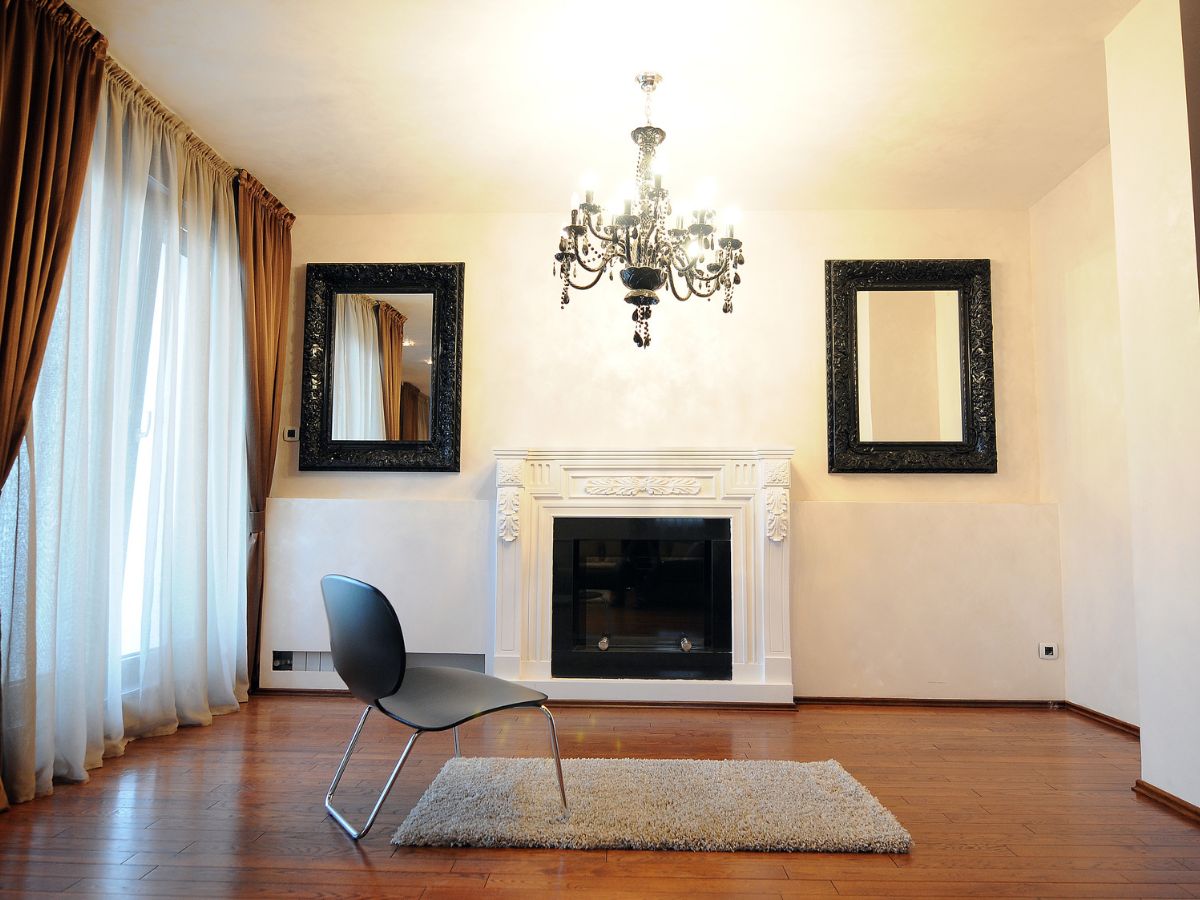
Frames should support the overall design direction. A heavy, ornate frame can overwhelm a modern space, while a thin, minimal frame may feel underwhelming in a traditional room.
Consider the finishes already present. Does the frame complement the hardware, lighting, or furniture? Framed mirrors often feel more intentional and substantial than frameless ones, especially in residential remodels and higher-end builds.

6. Poor Installation and Support
This is both a design and safety issue. Mirrors must be securely anchored to wall studs or appropriate wall supports. In bathrooms and commercial spaces, proper installation is critical for long-term durability and code compliance.
A beautifully designed space can be undermined by visible anchors, crooked placement, or unsafe mounting.
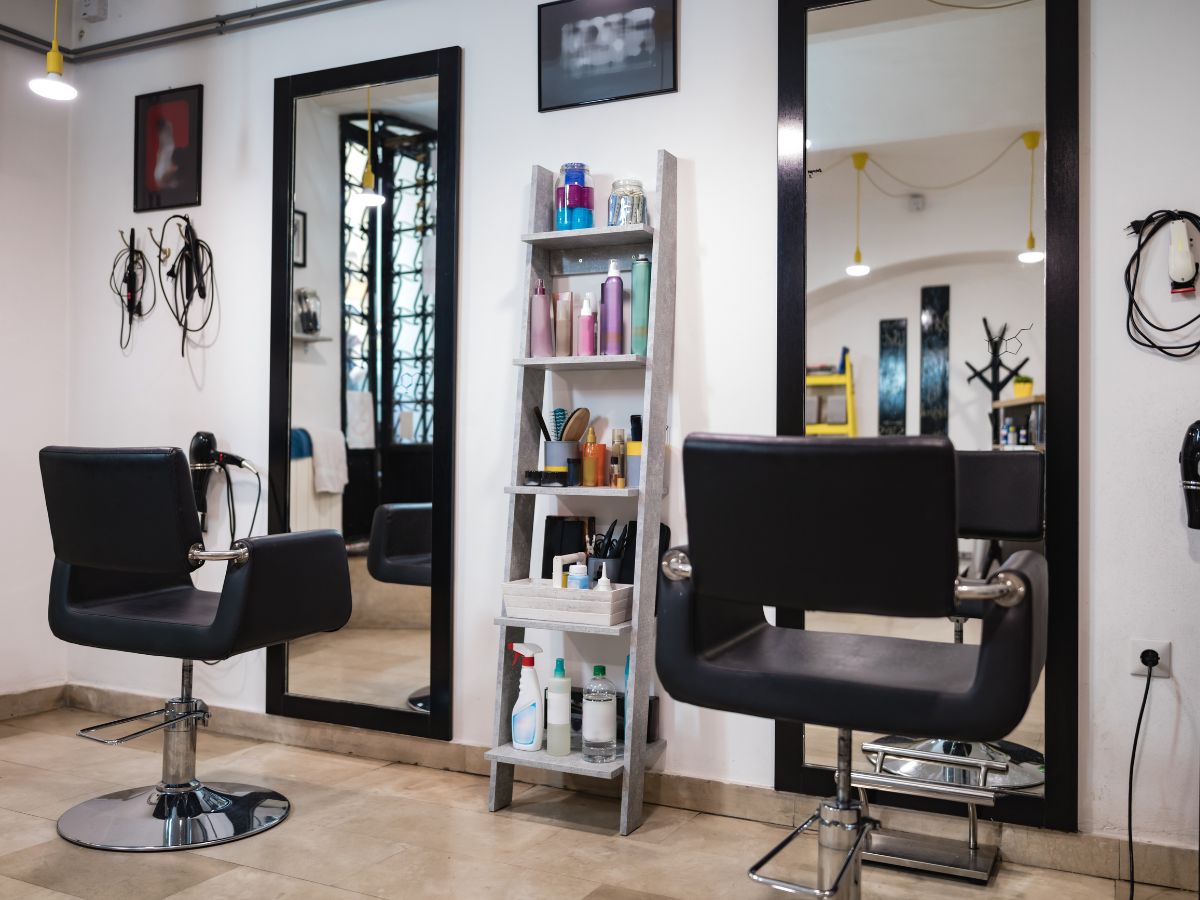
Hanging a mirror is not just about filling empty wall space. It is about scale, reflection, lighting, and alignment with the room’s overall design. When placed thoughtfully, a mirror enhances proportion and light. When installed carelessly, it draws attention for the wrong reasons.