Is an Expensive Mirror Worth It?
An expensive mirror can be worth it but only if you understand what you’re paying for. There are budget mirrors, custom, and high-end pieces. The difference isn’t just price. It’s quality, function, and impact on a space.
First, let’s talk about what separates a cheap mirror from an expensive one.
Clarity
The biggest factor is clarity. High-quality mirrors, especially those made with low-iron glass, reflect more accurate, neutral tones. Cheaper mirrors often have a slight green or gray tint because of the iron content in the glass. It’s subtle, but in well-designed interiors, that color shift can affect how a room feels, especially in spaces where lighting and color matter.
Distortion
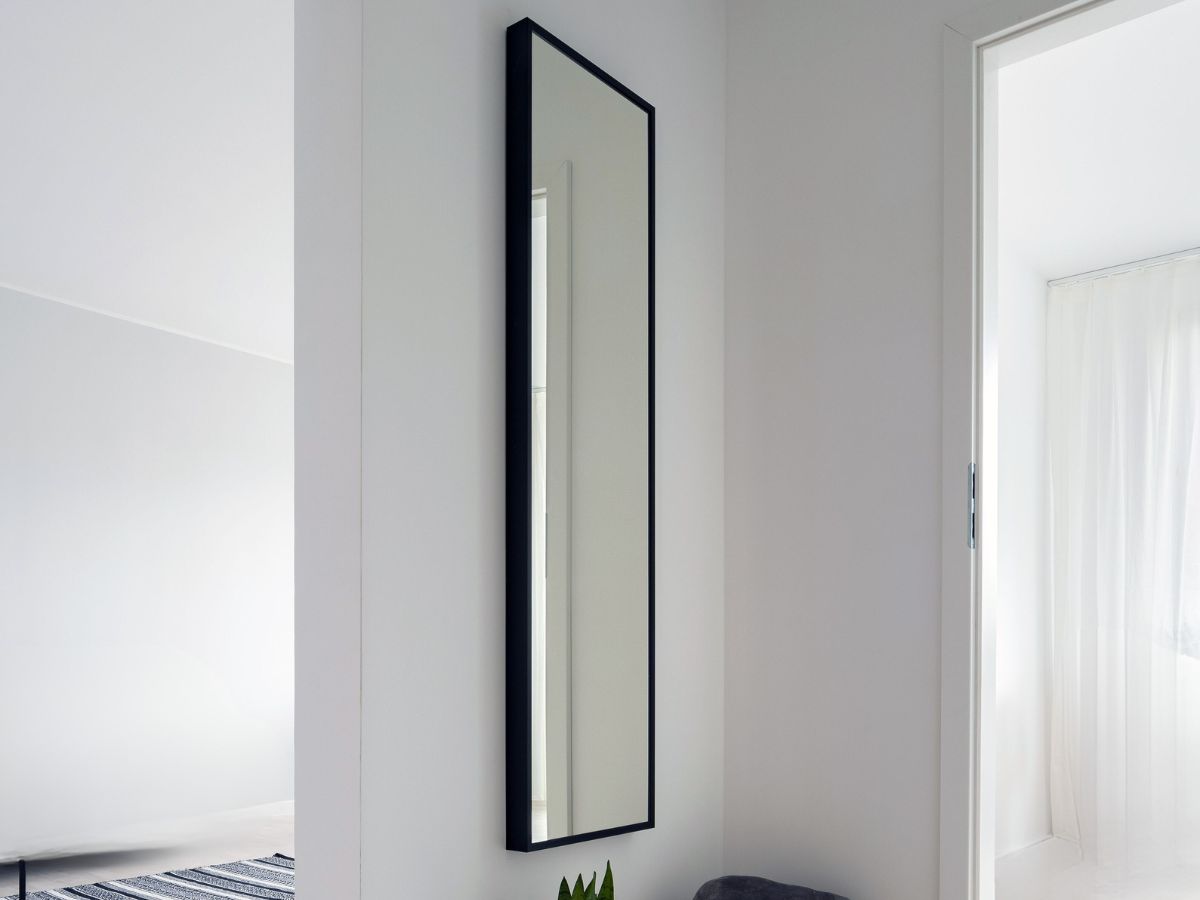
Then there’s distortion. Lower-cost mirrors can warp reflections slightly. You may not notice it immediately, but it shows up in stretched lines or uneven proportions. In bathrooms, entryways, or dressing areas, that becomes frustrating fast. Premium mirrors are manufactured to stay optically flat, giving a true reflection.
Durability
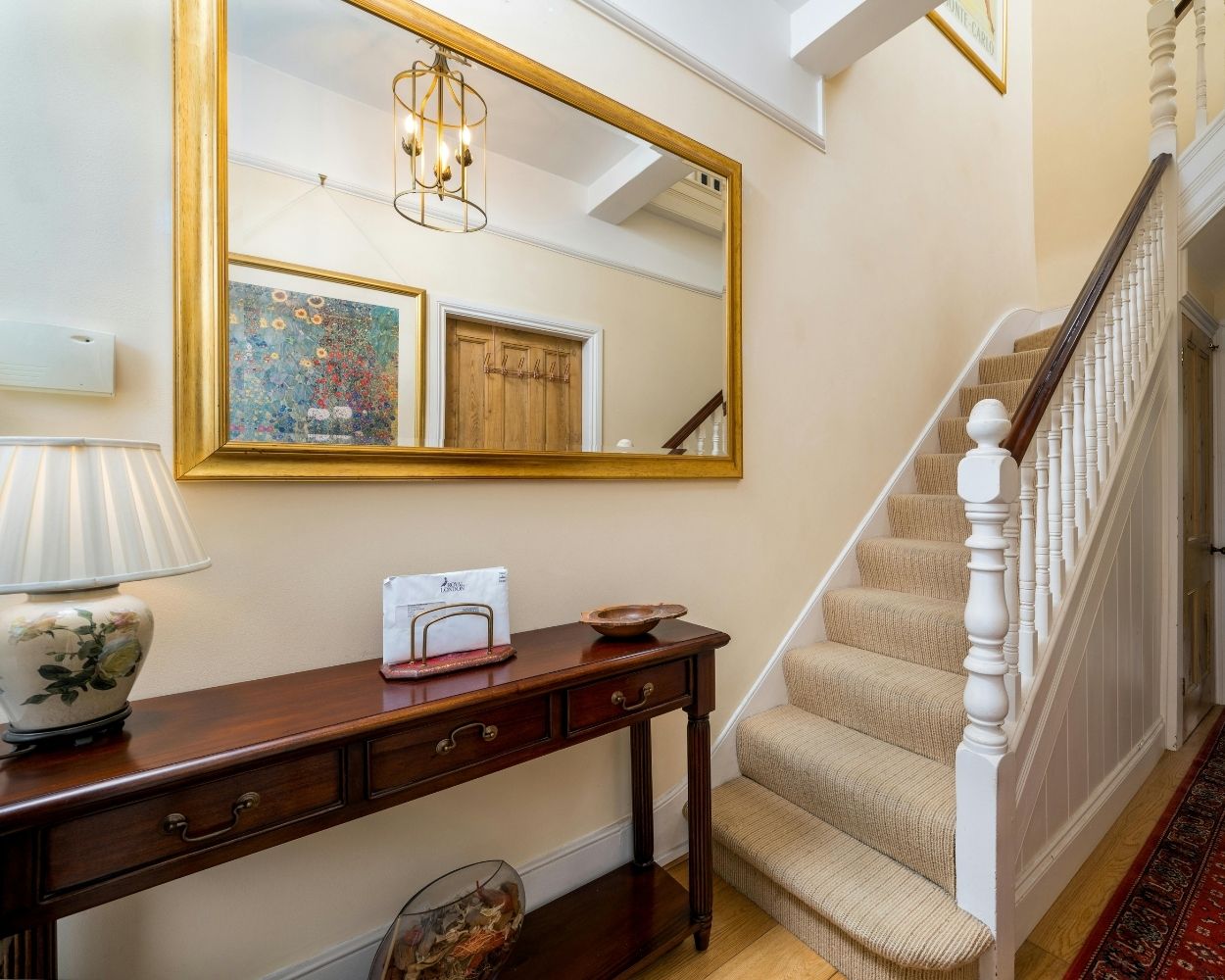
Durability is another piece of the puzzle. Higher-end mirrors typically use better backing materials, which protect against moisture and prevent black spots or edge corrosion over time. This matters in humid environments like bathrooms, where cheaper mirrors tend to degrade faster.

Design Impact
Now here’s the part most people overlook: design impact.
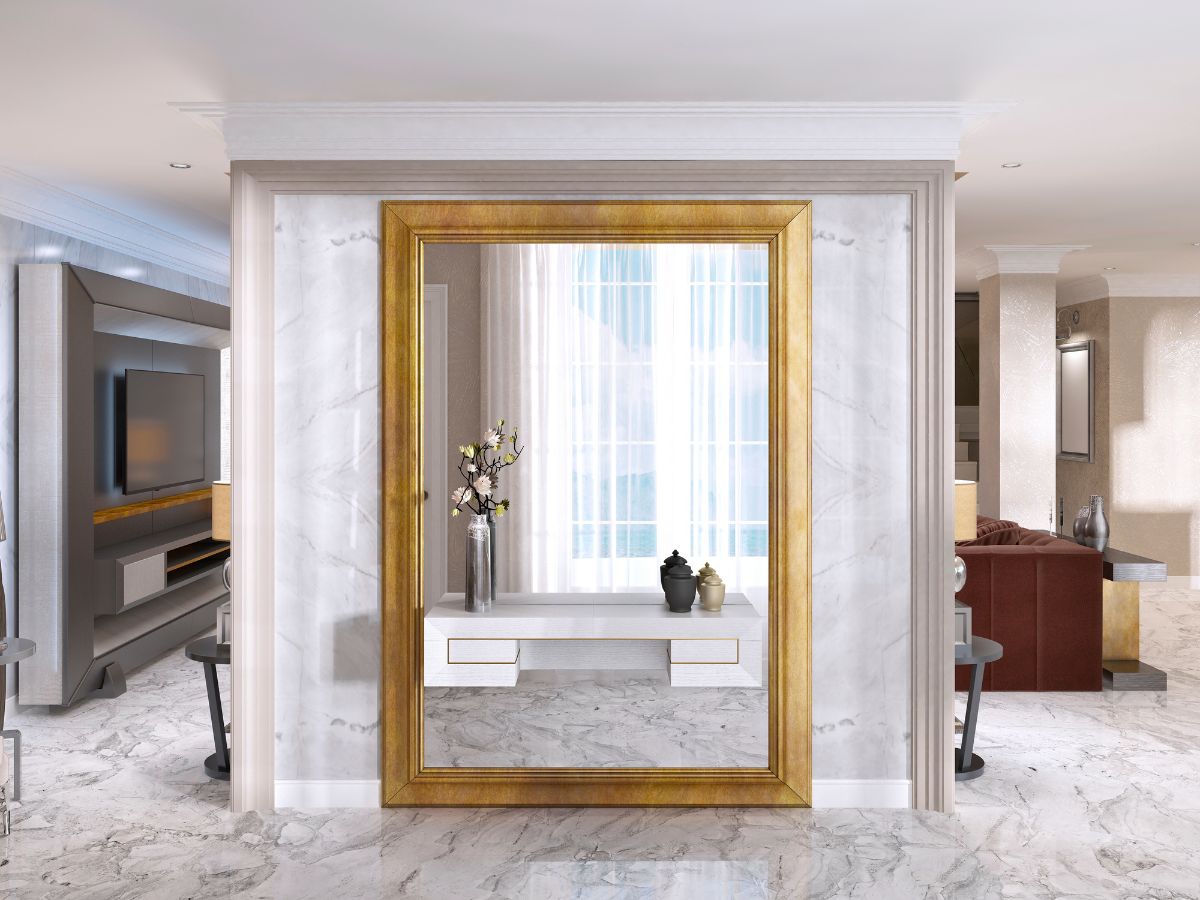
A mirror isn’t just functional. It’s one of the most powerful visual tools in a room. It can make a small space feel larger, reflect natural light, and act as a focal point. A well-designed, high-quality mirror often has a stronger presence. The frame, proportions, and finish are usually more refined, which elevates the entire space.

That said, not every room needs a luxury mirror.
If you’re furnishing a rental, styling a secondary room, or working with a tight budget, a mid-range mirror will do the job just fine. The key is to check for obvious distortion and choose a size and shape that works with your layout.
Where an expensive mirror is worth it:
- In primary bathrooms or dressing areas where you use it daily
- As a statement piece in a living room or entryway
- In projects where material quality and longevity matter
- When you’re investing in a cohesive, long-term design
Where it’s not:
- Temporary setups or short-term living situations
- Low-impact areas like storage rooms or garages
- When the mirror is purely decorative and not closely used
Recent industry insights also show that homeowners are leaning toward fewer, better-quality pieces rather than filling spaces with cheaper decor. This “buy less, buy better” approach aligns well with investing in a mirror that lasts and continues to look good over time.
Don’t chase price, chase quality. You don’t need the most expensive option on the market, but you should avoid the cheapest one if you care about clarity and longevity. In the end, a mirror is one of those pieces you interact with every day. When it’s good, you don’t notice it. When it’s bad, you definitely do.