How to Hang a Heavy Mirror Safely
Hanging a heavy mirror is a task that demands planning, the right tools, and a clear understanding of structure. Unlike lightweight artwork, a large framed mirror carries real weight and risk. For interior designers and remodeling professionals, proper installation protects not only the mirror but also the wall, the surrounding finishes, and the people using the space.
1. Know the Mirror’s Weight
The first step is knowing the mirror’s exact weight. Heavy framed mirrors often weigh more than expected. Always check the manufacturer’s specifications or weigh the mirror yourself. This number determines the hardware you need. Choose anchors and fasteners rated for more than the mirror’s weight. When safety is involved, extra capacity matters.
2. Assess the Wall
Next, assess the wall. Drywall, plaster, tile, concrete, and masonry each require different approaches. Whenever possible, secure at least part of the mirror into wall studs. Stud-mounted screws provide the strongest hold and reduce long-term movement. If stud placement does not align with the desired mirror position, use heavy-duty wall anchors or toggle bolts designed for high loads. In tiled bathrooms, drill through grout lines when possible to avoid cracking tiles.

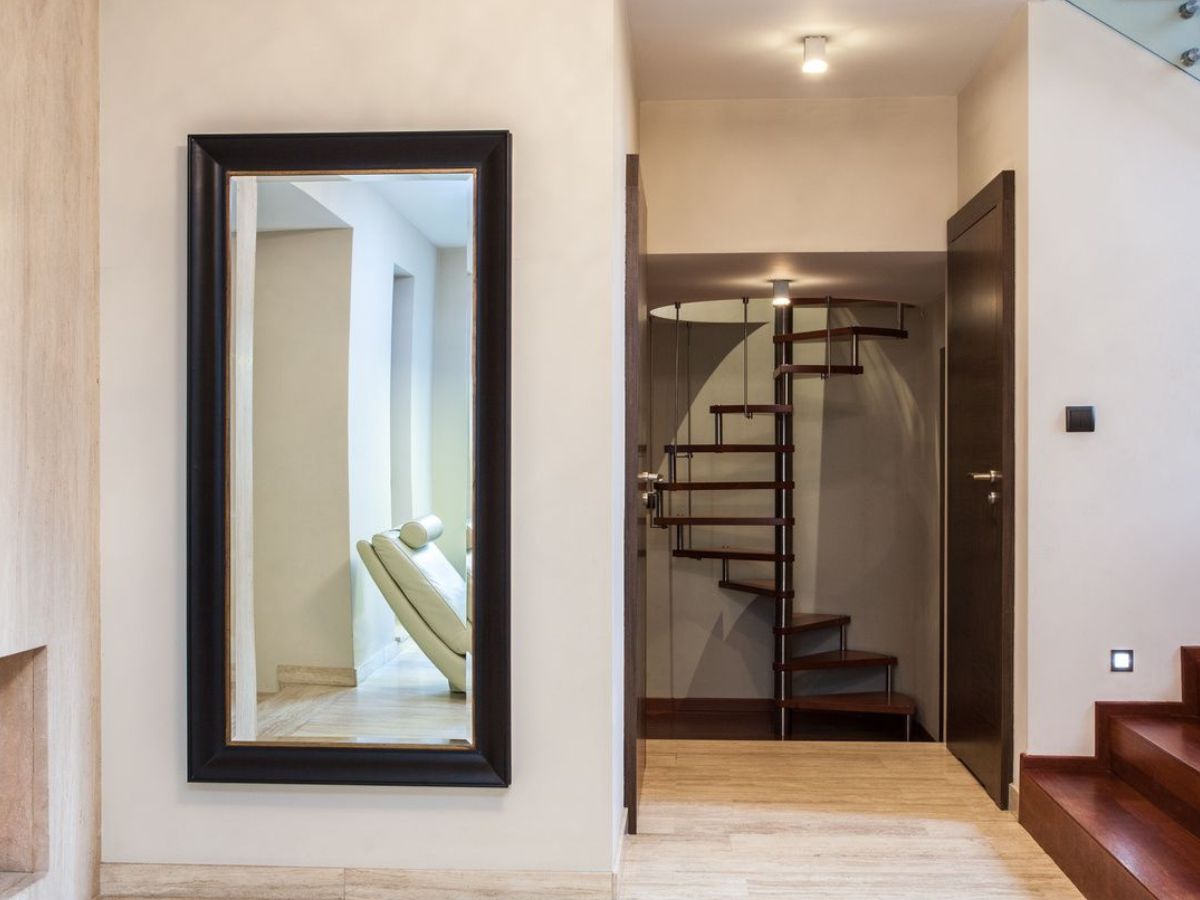
MAL-0698 Black Framed Mirror For Salon
3. Use the Correct Hardware
Hardware selection is critical. Many heavy mirrors include D-rings, keyhole slots, or French cleats. For large mirrors, French cleats are often the most secure option. They distribute weight evenly across the wall and allow for easier leveling. D-rings also work well when properly anchored, but they require precise measurement to ensure the mirror hangs straight.
4. Measure Twice, Drill Once
Before drilling, mark the wall carefully. Designers often use painter’s tape to outline the mirror’s position. This helps confirm height, scale, and alignment with surrounding elements such as vanities, consoles, or lighting. Measure twice and check for level lines. Small errors become obvious once the mirror is installed.
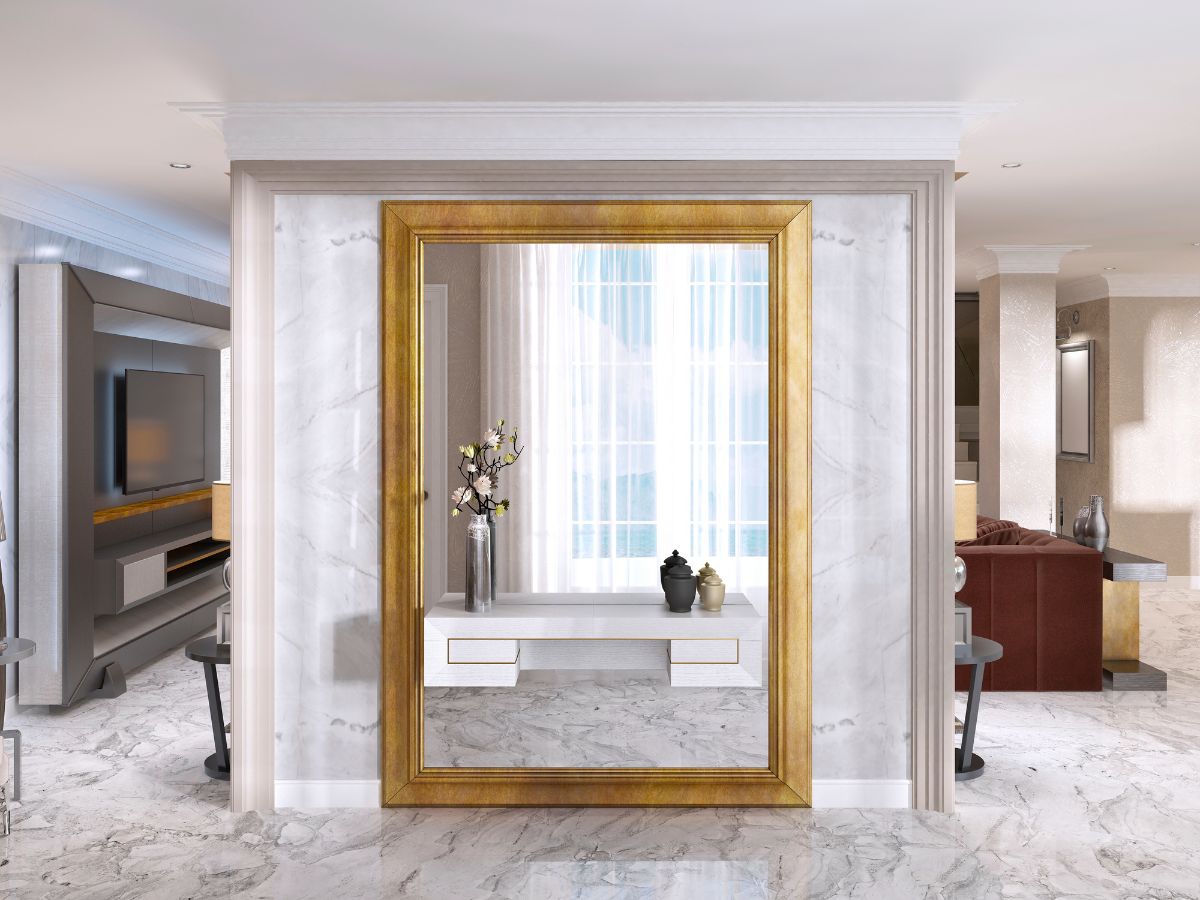
MAL-0388 Gold Framed Mirror for Living Room
5. Use an Assistant
When lifting the mirror, always work with a second person. Heavy mirrors are awkward to handle and can flex if lifted incorrectly. Supporting the frame evenly reduces stress on the glass and mounting hardware. Once the mirror is on the wall, gently test its stability before releasing it fully. It should sit flush and feel secure without shifting.
6. Make Final Adjustments
Final adjustments matter. Use a level to confirm alignment and tighten hardware gradually. Avoid over-tightening, which can stress anchors or crack plaster. Step back and view the mirror from different angles to ensure it sits square and complements the space.
Hanging a heavy mirror is as much about foresight as technique. When installed correctly, a framed custom mirror becomes a powerful design element, reflecting light and expanding the room visually. For professionals, taking the time to hang a mirror safely reinforces quality craftsmanship and delivers peace of mind.